
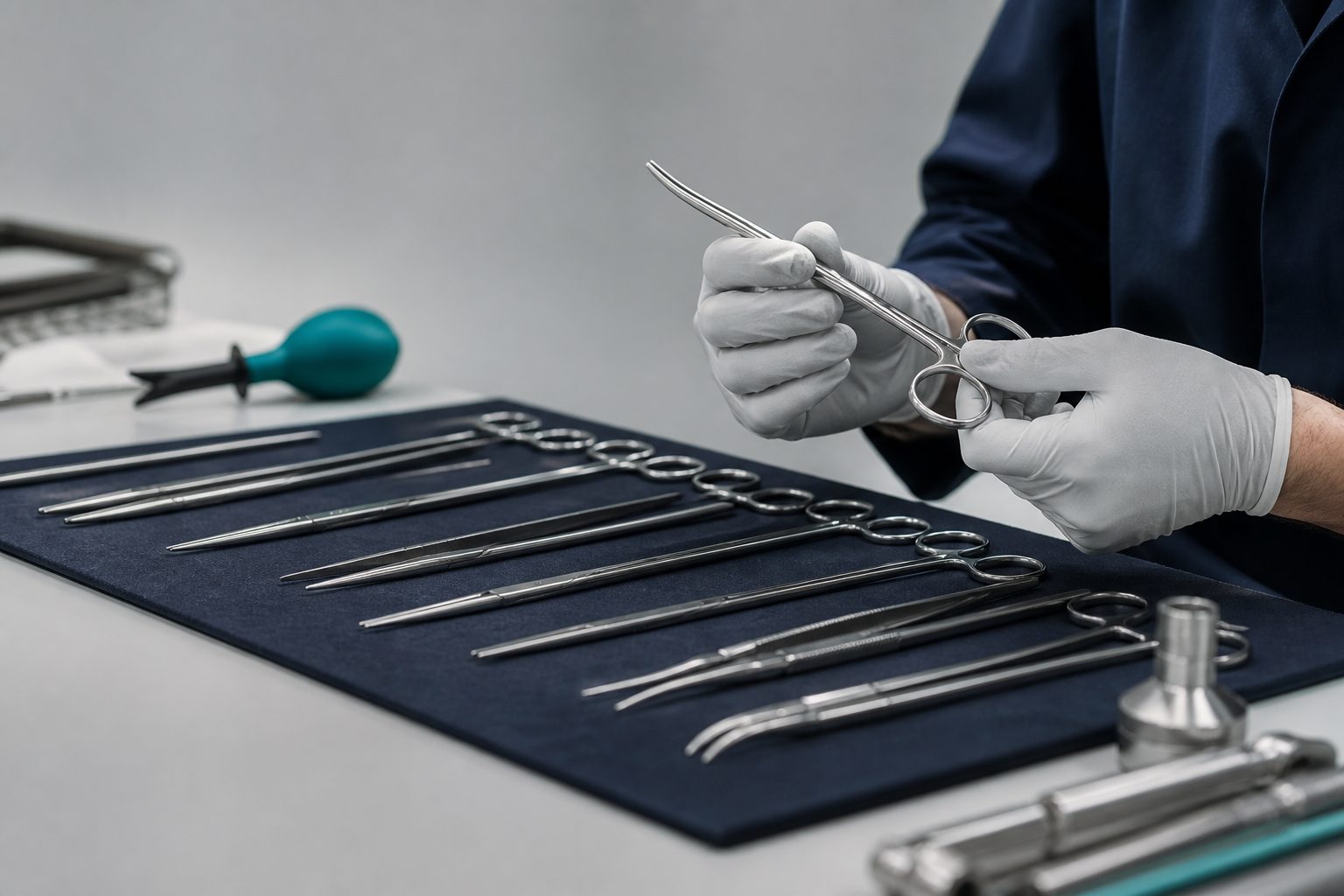
Surgical Instruments
Surgical Instrument Repair for General, Micro, and Laparoscopic Sets
Sharpening, realignment, insulation testing, and tip repair on the trays your OR turns over every day. Every instrument is inspected and quoted in writing before any work begins.
- Sharpening, tip work, and jaw alignment
- Insulation testing on laparoscopic sets
- Whole trays handled, not single pieces
- Pickup in SoCal, mail-in elsewhere
Get a Free Repair Quote
Tell us what failed and we will send a written quote before any work begins. No charge for the evaluation, and no purchase order needed to get one.
Quote before any work
You approve a written quote before a technician touches the scope.
Free evaluation
We diagnose the failure and price the repair at no charge, even if you decline.
We come and get it
Pickup and delivery across Southern California, mail-in service everywhere else.
Independent, not the OEM
All major manufacturers serviced, without OEM exchange pricing.
What we fix
Instrument Repair Work We Perform on Your Trays
The six problems that put an instrument on the shelf instead of in the set, and what each repair involves.
Sharpening on scissors, rongeurs, and curettes
Edges are restored to the original geometry rather than ground to whatever angle is quickest. A rongeur that crushes instead of cutting has usually lost its edge profile, not just its edge.
Jaw alignment and tip repair
Misaligned jaws, sprung box locks, and bent or worn tips are corrected so the instrument closes evenly across its full length. Needle holders that let a needle spin are realigned and re-inserted where the insert has worn through.
Insulation testing and reinsulation
Laparoscopic and electrosurgical pieces are tested for insulation breaks along the full shaft. Pinholes you cannot see are the ones that carry current into tissue outside the field of view, and they are repairable when caught.
Ratchet, spring, and box lock service
Ratchets that skip, springs that have lost tension, and box locks with lateral play are rebuilt so the instrument holds where the surgeon sets it. This is the fault most often written off as a piece being old.
Laparoscopic handle and shaft rebuilds
Loose rotation knobs, worn actuating rods, cracked handles, and shafts that no longer articulate are repaired through the length of the instrument. Disassemblable pieces are cleaned, rebuilt, and function checked.
Corrosion, staining, and pitting treatment
Surface staining, rust transfer, and early pitting are cleaned and passivated so the damage stops spreading through the tray. We report which pieces are past recovery so they stop being reprocessed and re-issued.
Sharpening and Realignment Across an Instrument Set
Instruments do not get pulled the way scopes do. A scope failure stops a case, so it gets attention immediately. A dull pair of scissors gets quietly worked around by the scrub tech for months, and the set slowly becomes a collection of pieces nobody wants to use.
That is why we prefer to take the whole tray rather than the two pieces someone complained about. Sharpening, jaw alignment, ratchet tension, and box lock play are checked across the set, and you get one list back showing what was repaired, what needs watching, and what is past recovery.
The work is done to the original geometry. An edge ground at a convenient angle cuts for a few weeks and then behaves worse than it did before, which is how a department ends up paying for the same instrument twice a year.
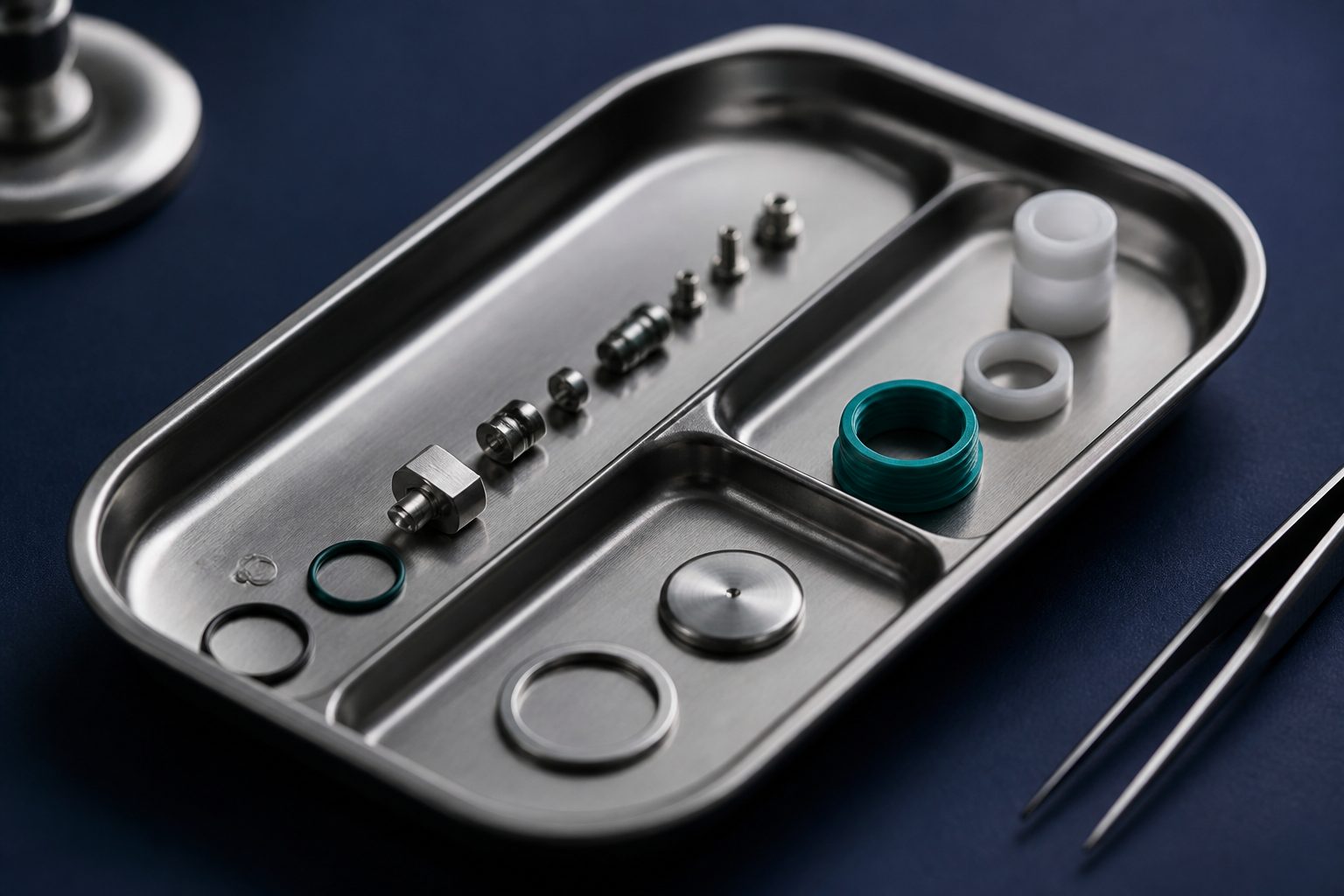
Insulation Testing on Laparoscopic Instrument Sets
Insulation failure is the one fault in a tray that carries real patient risk. A pinhole along the shaft of a laparoscopic instrument routes current somewhere the surgeon cannot see, and the break is far too small to catch on visual inspection at the sink.
Every electrosurgical piece we handle is tested along its full length, and breaks that can be repaired are reinsulated rather than the instrument being condemned outright. Where the damage is beyond repair, that piece is flagged so it comes out of circulation instead of going back into the set.
Laparoscopic pieces also take more mechanical wear than anything else in the tray. Rotation knobs loosen, actuating rods stretch, and jaws stop closing evenly. We rebuild through the shaft, and instruments from platforms like Karl Storz laparoscopic sets are common enough here that the failure patterns are familiar.
Tip Repair and Jaw Alignment in Instrument Service
Most complaints from the OR come down to one thing. The instrument no longer does what the surgeon expects when it closes. A needle holder that lets a needle rotate, forceps that grip on one side, and a ratchet that skips a tooth are all the same category of problem, and all three are bench repairs.
Endoscopic accessories deserve the same attention, because they cause damage elsewhere when they go. Worn biopsy forceps chew through working channel liners, and the department pays for that in scope repairs rather than in instrument repairs. If that sounds familiar, the biopsy port and working channel page explains what that wear looks like from the scope side.
Sets rarely fail alone either. Trays that go out with a tower usually need the camera head and coupler checked at the same time, and the full range of equipment we service runs under a single account.
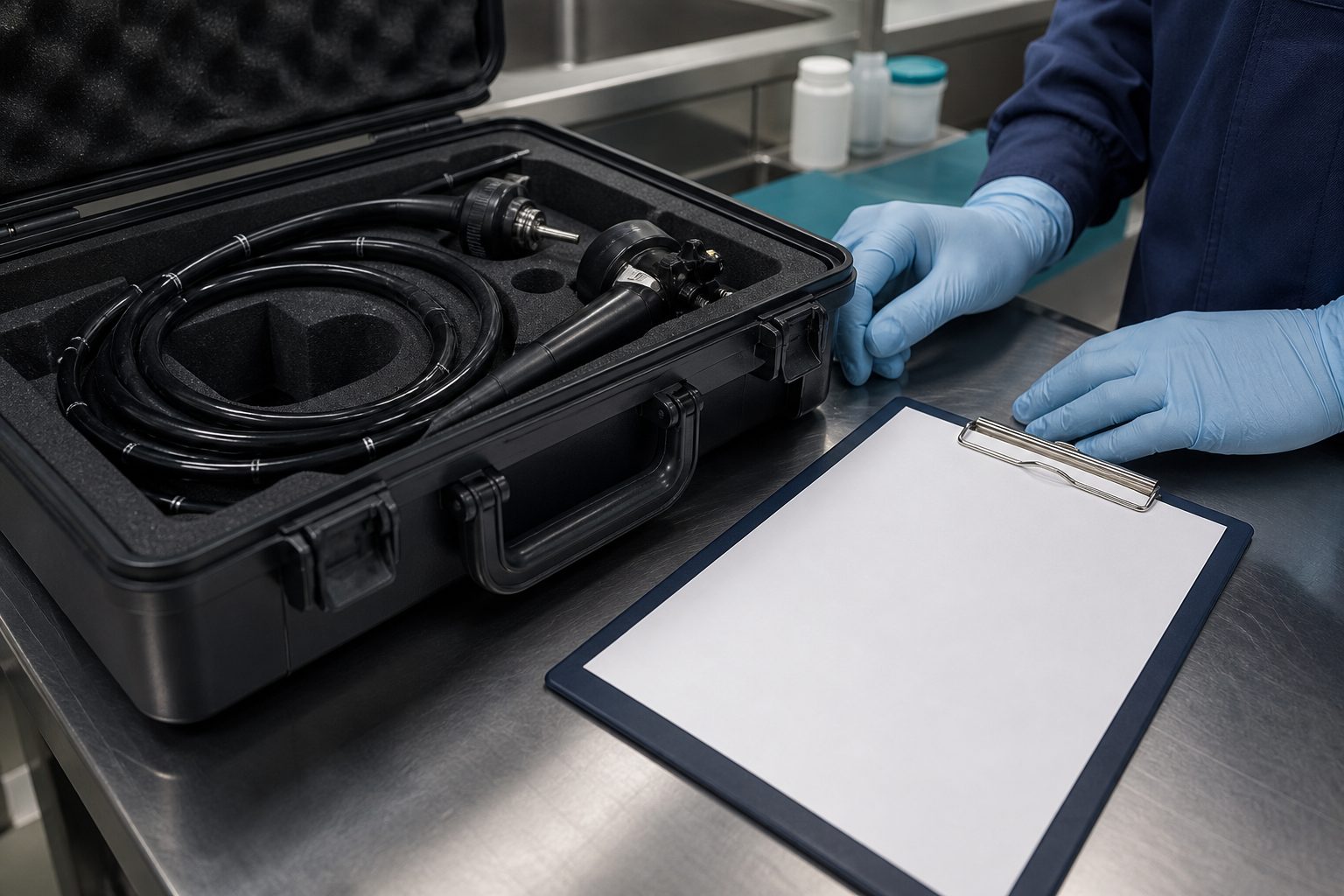
What Instrument Repair Saves Compared With Replacement
Replacing a tray piece by piece is the default answer because it is the simplest one to process. It is also how a department spends a capital line on things that a bench could have restored to original specification for a fraction of the outlay.
We evaluate first and quote in writing, which means you can see the split between the pieces worth repairing and the ones that should be retired. Plenty of managers approve the first list and defer the second, and that is a sound decision when both are in front of you.
If sending trays out is the part that does not work for your schedule, a technician can do a portion of this work in your building instead. The on-site service page covers what can be cleared during a scheduled visit, and powered handpieces and drills are handled under the same account.
How it works
How Surgical Instrument Service Works From Pickup to Return
Four steps, with an itemized quote you approve before a single piece is worked on.
Tell us what failed
Send the manufacturer, model, and what you are seeing. A photo of the damage helps but is not required.
We collect the scope
Courier pickup across Southern California, or ship the device in to our bench from anywhere in the country.
You get a written quote
We evaluate the device, document the failure, and price the repair. Nothing proceeds until you approve it.
Repaired, tested, returned
The device is repaired, leak and function tested, and returned with documentation for your records.
Manufacturers Whose Surgical Instruments We Repair
General and specialty instrumentation across the makers found in most trays, including patterns no longer in production.
Questions we get
Instrument Repair Questions From SPD Managers
Do you take whole trays or only the pieces that are failing?
Can you test insulation on our laparoscopic instruments?
How do we know an instrument is worth repairing rather than replacing?
Our scopes keep coming back with channel damage. Could the instruments be causing it?
Do you sharpen to the original edge geometry?
Other Equipment We Repair Alongside Instrument Sets
The scopes, cameras, cables, and powered handpieces that leave the room on the same case cart.
Get a Free Quote on Surgical Instrument Repair
Send the tray list or a photo of what is failing. We evaluate the set and price the work before anything is touched.
Monday to Friday, 8:00 AM to 5:00 PM Pacific
Saturday and Sunday, closed
Mail-in repairs received any day
Serving Southern California with pickup and delivery, and the rest of the country by mail-in.