
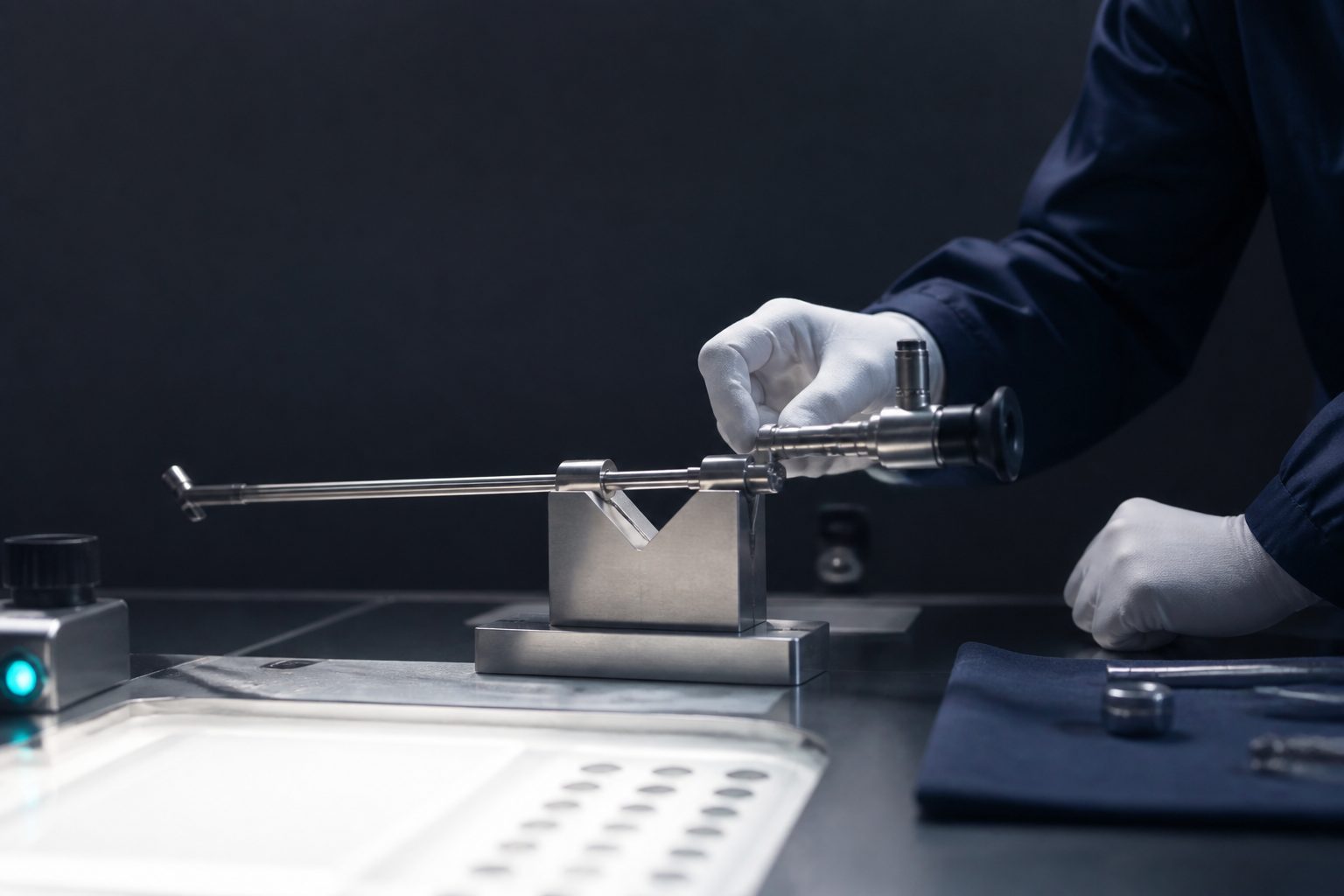
Urology
Cystoscope Repair for Rigid Urology Optics and Sheaths
Rigid cystoscopes fail as a system, not as a telescope. We rebuild the optics, correct the sheath and bridge fit that caused the damage, and repair the light post, with a written quote before any of it starts.
- Rod lens rebuilds on 0, 12, 30, and 70 degree optics
- Light post repair and illumination bundle work
- Sheath, bridge, and deflecting mechanism service
- Free evaluation and a written quote before work
Get a Free Repair Quote
Tell us what failed and we will send a written quote before any work begins. No charge for the evaluation, and no purchase order needed to get one.
Quote before any work
You approve a written quote before a technician touches the scope.
Free evaluation
We diagnose the failure and price the repair at no charge, even if you decline.
We come and get it
Pickup and delivery across Southern California, mail-in service everywhere else.
Independent, not the OEM
All major manufacturers serviced, without OEM exchange pricing.
By symptom
Cystoscope Optics Failures We See in Urology Suites
The complaint on the tag, and the mechanical fault behind it. On a sealed telescope, most of these get worse with another reprocessing cycle rather than better.
Moisture inside the optical train
Irrigation fluid or steam has worked past an eyepiece or light post seal and condensed on the internal glass. Nothing on the outside will clean it, because the affected surfaces are sealed inside the shaft. The scope is dried, internally serviced, and resealed.
Cracked element in the relay
The telescope has been flexed, usually while it was inside a sheath that no longer accepts it cleanly. One glass element in the column fractures and takes a slice of the image with it, and only a relay rebuild returns the full field.
Light post fracture at the joint
The post takes the full weight of a stiff light cable every time the scope is set down or dragged across a drape, and it sits at the weakest junction on the body. It can be rebuilt and resealed, and we check the illumination bundle behind it at the same time.
Distorted sheath or worn bridge
A sheath that has been bent, or a bridge whose lock has worn, stops guiding the telescope straight. Staff push harder, and the load lands on glass. The pair is checked and corrected together, since a rebuilt scope in a distorted sheath fails again quickly.
Deflecting mechanism wear
Albarran style deflectors have a linkage that wears and a seal that leaks, and once either goes, the surgeon loses the angle needed to place a stent or a guidewire. The mechanism is rebuilt rather than the whole bridge being replaced.
Broken illumination fibers
The fiber bundle loses strands from bending at the post and from repeated tray handling, and the loss is slow enough that no single day makes it obvious. We count the surviving strands, rebuild the bundle, and rule the light cable in or out before touching the optics.
What Instrument Passage Does to a Cystoscopy Telescope
A rigid cystoscope is not one device. It is a telescope, a sheath, a bridge, and often a deflecting mechanism, and instruments travel through that assembly with the optics sitting a millimeter away. Guidewires, stents, biopsy forceps, laser fibers, and stone baskets all pass under the surgeon's hand while the telescope is locked in place. The optics are static and everything else is moving.
That is why cystoscope damage clusters at the distal end. A laser fiber advanced before it clears the working channel can strike the window, and a stent pusher that catches on a worn bridge transmits its load straight back along the shaft. The fracture then shows up as a wedge of missing field, which is the same failure the whole family shares and which we describe on the rigid endoscope service hub.
It also means a single telescope repair rarely tells the whole story. If the scope broke because the bridge no longer guides it, sending back a rebuilt telescope alone puts a new device into the same failure path.
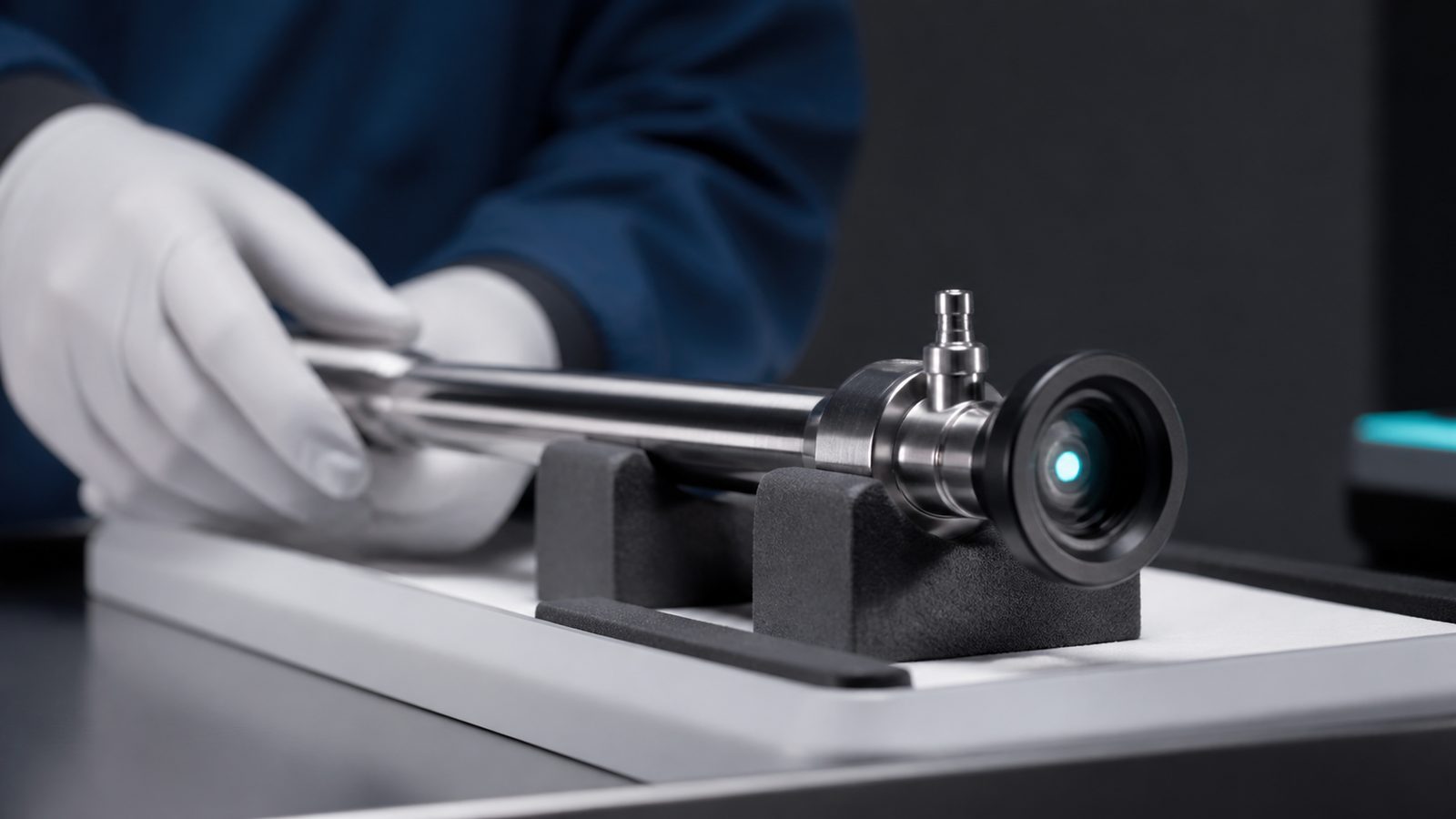
Bridge and Sheath Wear That Ends Up as Optical Damage
Sheaths get bent. They are long, thin, and made of metal thin enough to matter to the patient, and they spend their lives being loaded into trays, run through washers, and locked to bridges. A sheath that is a fraction out of true still accepts the obturator, so it passes inspection, and then it binds on the telescope.
Bridges wear differently. The lock loses its grip, the seal at the eyepiece end hardens, and the port that was supposed to be watertight starts to weep. Fluid then travels where the design never intended it to go, which is how a bridge problem becomes an optical problem two weeks later.
We look at the assembly rather than the part that was tagged, and the evaluation says which components are actually driving the failures. That matters most on legacy inventory, since ACMI and Circon urology sets and older Richard Wolf cystoscopy components are still in daily rotation long after the original support ended. We are an independent shop and are not affiliated with or authorized by any manufacturer.
Light Posts and Deflecting Mechanisms in Cystoscope Service
Two parts fail on urology telescopes far more than the optics do, and both are repairable. The first is the light post. It sticks out at an angle, it carries a stiff cable, and every time the scope is placed on a drape or lifted by the cable the load goes through one joint. Posts snap, and when they do the seal behind them goes with it, which lets moisture into the shaft.
The second is the deflecting mechanism. An Albarran lever depends on a linkage and a seal working together, and once the seal leaks the lever gets stiff and then stops holding position. Surgeons work around it for a while by changing approach, which delays the repair and does nothing for the underlying wear.
Both faults look like a failing scope from across the room. A dim field with a broken post is a light fiber and post repair, and moisture that entered behind a fractured post follows the same course as fluid getting into any sealed scope. Caught early, both are small jobs.
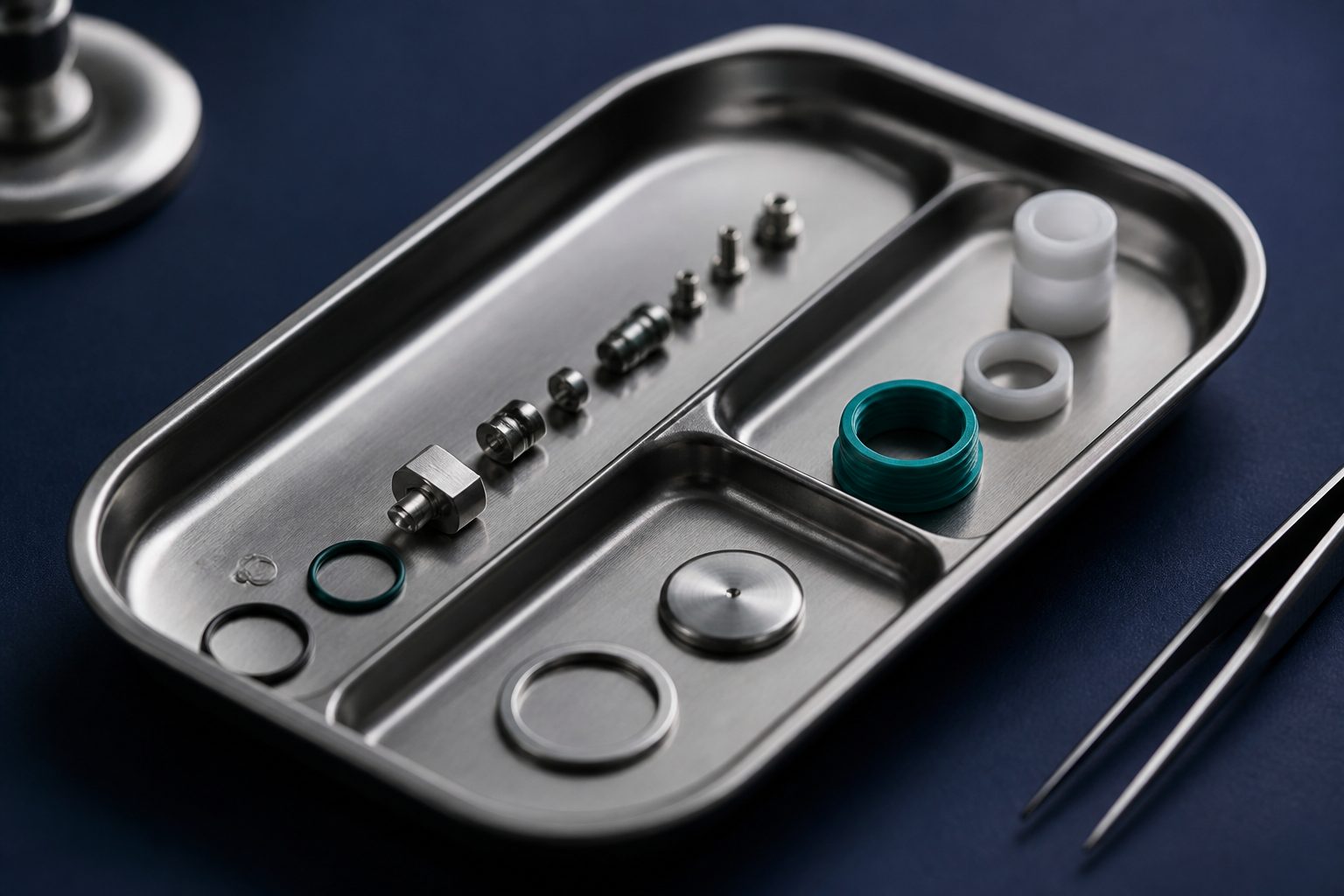
Hazy Images and What Sealed Cystoscope Optics Cannot Hide
The most common message we get from urology is that the picture has gone soft and cleaning has not helped. It has not helped because the affected glass is inside the shaft. Steam sterilization cycles the seals from room temperature to well above boiling and back, hundreds of times, and eventually one of them stops sealing. Irrigation fluid and steam then reach surfaces that no brush can touch.
Left in rotation, a hazy scope gets worse in a specific way. Water on hot glass etches it, so a device that could have been resealed becomes a device that needs its relay rebuilt. The visual check takes ten seconds at assembly: look through the eyepiece at a bright surface, and if it is not clear and colorless, the scope does not go on the tray.
Distal window chips deserve the same treatment even when the image still works, because each chip throws scattered light back into the picture and flattens contrast. That is covered in more detail on the cracked distal lens page. Urology departments usually send this inventory together with their resectoscope working elements and any nephroscope optics from the stone service, which keeps it to one evaluation and one return.
How it works
How Cystoscope Service Works, From Pickup to Return
Four steps, and the decision on what to repair sits with your department after the written evaluation reaches you.
Tell us what failed
Send the manufacturer, model, and what you are seeing. A photo of the damage helps but is not required.
We collect the scope
Courier pickup across Southern California, or ship the device in to our bench from anywhere in the country.
You get a written quote
We evaluate the device, document the failure, and price the repair. Nothing proceeds until you approve it.
Repaired, tested, returned
The device is repaired, leak and function tested, and returned with documentation for your records.
Questions we get
Cystoscope Repair Questions From SPD and Urology Teams
Should we send the sheath and bridge, or just the telescope?
Can a broken light post be repaired, or does the scope need replacing?
Our Albarran lever will not hold position. Is that a bridge replacement?
Do you service older ACMI and Circon urology scopes?
The image is dim but the source is at maximum. What do we check first?
Other Rigid Scope Repair Pages in This Section
The same rod lens construction and the same steam exposure, meeting a different anatomy and a different working channel.
Get a Free Quote on Your Cystoscope Optics Repair
Tell us the manufacturer, the view angle, and whether the sheath and bridge are coming with it. We will price the work before anyone opens the device.
Monday to Friday, 8:00 AM to 5:00 PM Pacific
Saturday and Sunday, closed
Mail-in repairs received any day
Serving Southern California with pickup and delivery, and the rest of the country by mail-in.