
On-Site Service
On-Site Instrument Repair for Southern California Facilities
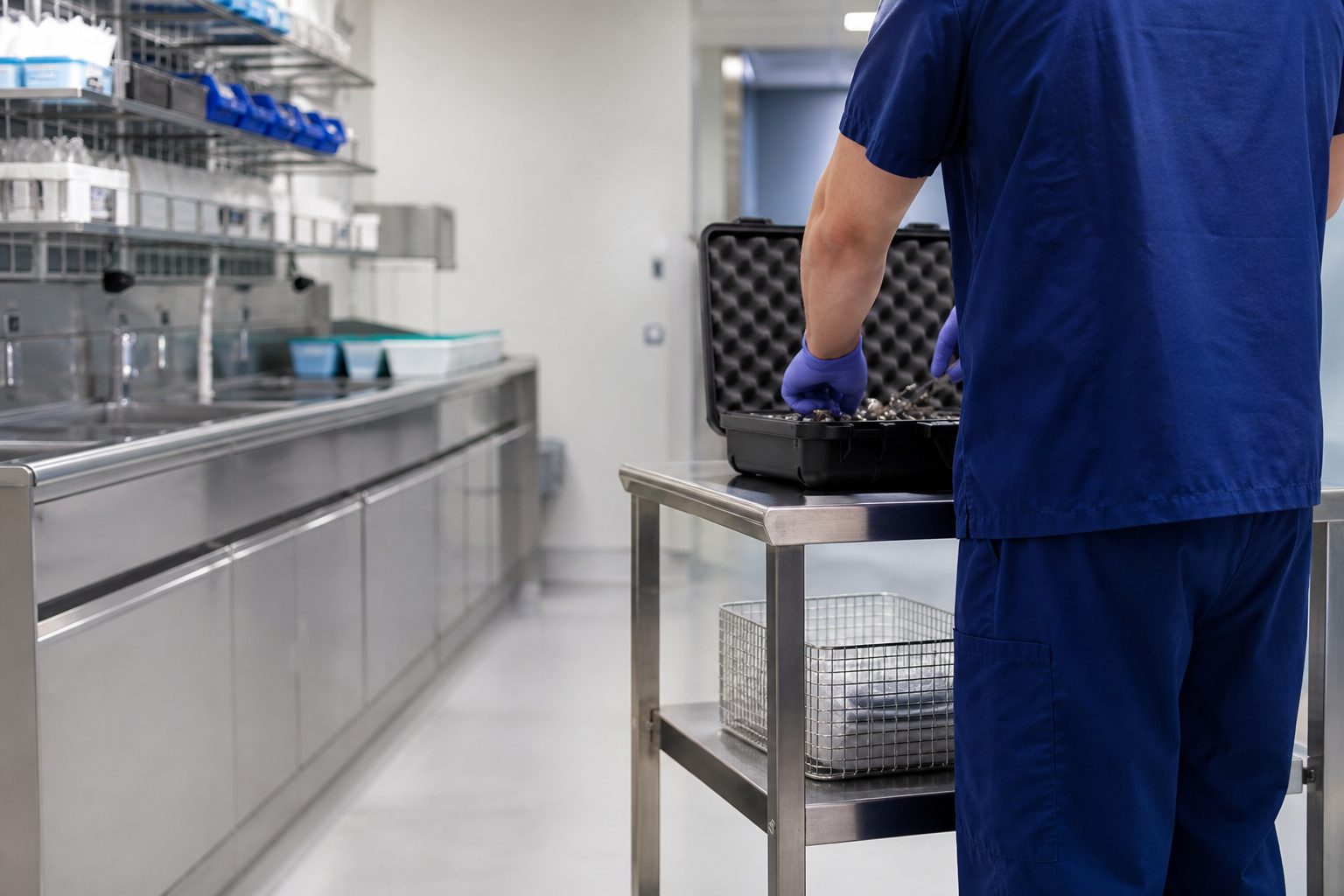
A technician works inside your building on scheduled visits, clearing minor repairs during the visit so instruments never leave the department. Anything needing the bench is quoted in writing first.
- A technician works in your department
- Minor repairs cleared during the visit
- Trays stay inside the building
- Bench work quoted in writing first
Get a Free Repair Quote
Tell us what failed and we will send a written quote before any work begins. No charge for the evaluation, and no purchase order needed to get one.
Quote before any work
You approve a written quote before a technician touches the scope.
Free evaluation
We diagnose the failure and price the repair at no charge, even if you decline.
We come and get it
Pickup and delivery across Southern California, mail-in service everywhere else.
Independent, not the OEM
All major manufacturers serviced, without OEM exchange pricing.
What we do there
On-Site Repair Work We Complete During a Visit
The six categories of work a technician can clear in your department without anything being shipped out.
Sharpening and edge work at your bench
Scissors, rongeurs, and curettes are sharpened in the department so the set goes back into circulation the same visit. Nothing is boxed, shipped, tracked, or waited on.
Jaw alignment, ratchet, and box lock adjustment
Instruments that no longer close evenly, hold a ratchet position, or grip a needle are adjusted on site. These are the faults staff work around silently, so they are the ones a visit catches best.
Full tray inspection and triage
Every piece in a tray is inspected and sorted into working, repairable on site, needs the bench, and should be retired. You get the list before anything is committed to.
Scope and camera intake inspection
Flexible and rigid devices flagged by reprocessing are inspected in the department so you know which ones genuinely need to leave. That alone often keeps two or three devices in rotation.
Powered handpiece checks and minor service
Drills, saws, and drivers are run under load, checked for heat, noise, and chuck slip, and given minor service where it can be done in place. Anything needing a bearing or gearbox rebuild is tagged for the shop.
Insulation testing on electrosurgical instruments
Laparoscopic and electrosurgical pieces are insulation tested in your department, and failures are pulled immediately rather than continuing to be reprocessed and re-issued.
What Instrument Repair in Your Facility Actually Covers
The reason trays go unrepaired is almost never that nobody noticed. It is that pulling a set, boxing it, shipping it, and tracking it costs more staff time than working around a dull pair of scissors. So the workaround becomes permanent and the set quietly degrades.
A visit removes that friction. The technician works at a bench in your department, and the sharpening, alignment, ratchet, and box lock work happens with the set still inside the building. Trays that would have waited a quarter go back into circulation before the technician leaves.
The starting point is usually the same set of trays your staff already complains about. We inspect the whole set rather than only the flagged pieces, because the flagged pieces are the ones people gave up on and the rest are the ones about to fail. The bench-side version of this work is covered on the surgical instrument service page.
Sterile Processing Gains From an On-Site Repair Visit
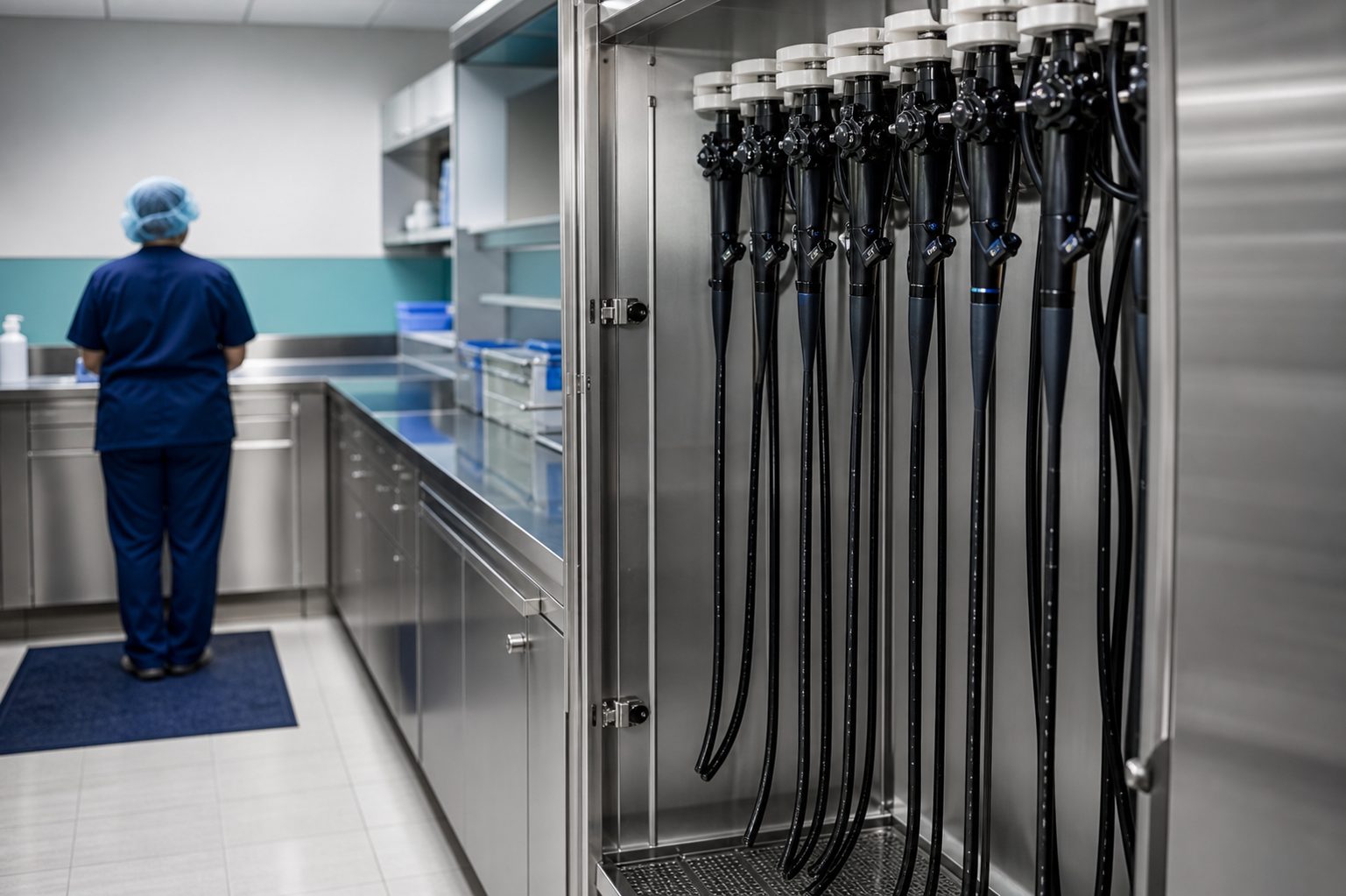
Sterile processing carries the consequences of instrument problems without owning the budget that fixes them. A set that comes up short delays a case, and the department that gets asked about it is rarely the one that decided to defer the repair.
A visit produces something useful for that conversation. You end up with a documented list of what was repaired in place, what needs the shop, and what should be retired, per tray. That is a defensible request rather than an opinion, and it is far easier to act on at budget time.
The inspection also covers the devices reprocessing keeps flagging. Knowing which flexible scopes genuinely need to leave the building saves at least as much as the instrument work does, and our page on failed leak tests explains which of those results can wait and which cannot.
When Mobile Repair Stops and Bench Work Takes Over
Plenty of work cannot honestly be done in a hospital corridor. Bearing replacement, optical rebuilds, channel liners, and anything requiring pressure testing needs shop equipment, and pretending otherwise produces a repair that fails on the next case.
So the visit triages. Whatever can be cleared in place is cleared in place, and whatever needs the shop is tagged, listed, and quoted in writing before it leaves your building. You approve the second list or you do not, and the equipment comes back either way.
Devices that go back with us follow the standard route. Flexible scope work and powered handpiece rebuilds are both bench jobs, as is most of the rest of the equipment we service. All of it runs under the same account and the same written quote rule.
Scheduling On-Site Service Around Your OR Calendar
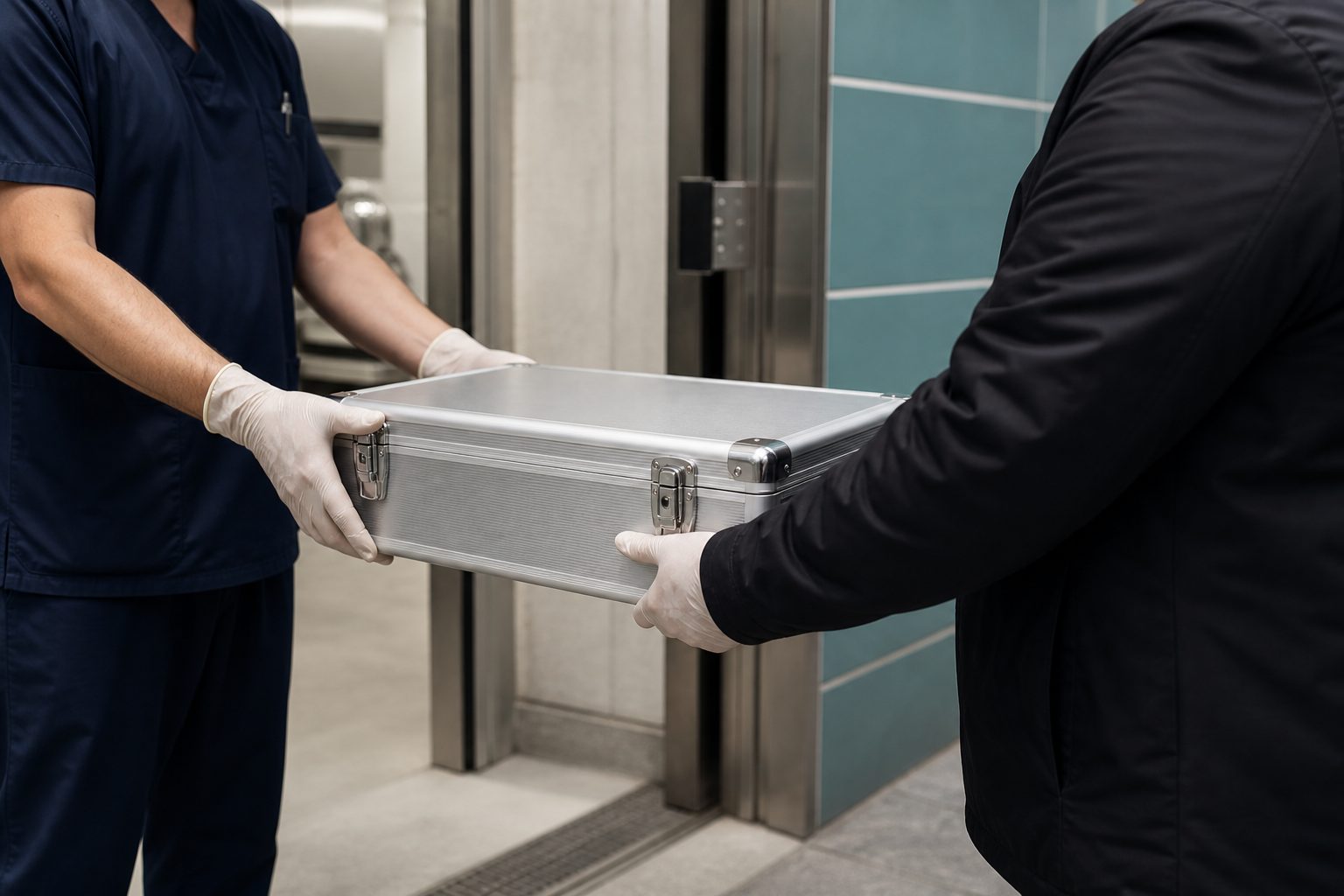
Visits are arranged around your schedule rather than ours, because a technician working in decontamination during peak turnover helps nobody. Most departments settle on a rhythm once they see how much of the backlog clears in a single visit.
Coverage runs across Southern California, and the service area pages list the counties and cities where pickup, delivery, and in-facility visits are routine. Facilities outside that radius can ship the device to our bench instead.
Mixed inventories are the norm and not a problem. Trays built around Karl Storz instrumentation sit beside pieces from four other makers in most departments, and the inspection covers all of it in one pass.
How it works
How a Mobile Repair Visit Works From Scheduling to Signoff
Four steps, and everything beyond the scope of the visit is priced in writing before it goes anywhere.
Tell us what failed
Send the manufacturer, model, and what you are seeing. A photo of the damage helps but is not required.
We collect the scope
Courier pickup across Southern California, or ship the device in to our bench from anywhere in the country.
You get a written quote
We evaluate the device, document the failure, and price the repair. Nothing proceeds until you approve it.
Repaired, tested, returned
The device is repaired, leak and function tested, and returned with documentation for your records.
Manufacturers Covered by On-Site Instrument Service
The same manufacturers we handle on the bench, inspected and triaged in your department instead.
Questions we get
On-Site Repair Questions From Sterile Processing Managers
What can actually be repaired in our department during a visit?
Do we need to prepare anything before the technician arrives?
Can the technician look at our scopes while on site?
Does an on-site visit cost anything if we decline the repairs?
How far do you travel for in-facility visits?
Bench Work We Handle When On-Site Repair Is Not Enough
Scopes, cameras, cables, probes, and powered equipment that need the shop rather than a visit.
Schedule On-Site Instrument Repair for Your Facility
Tell us the department, the tray count, and what is coming back from the OR flagged. We will set up a visit and price anything that needs the bench.
Monday to Friday, 8:00 AM to 5:00 PM Pacific
Saturday and Sunday, closed
Mail-in repairs received any day
Serving Southern California with pickup and delivery, and the rest of the country by mail-in.