
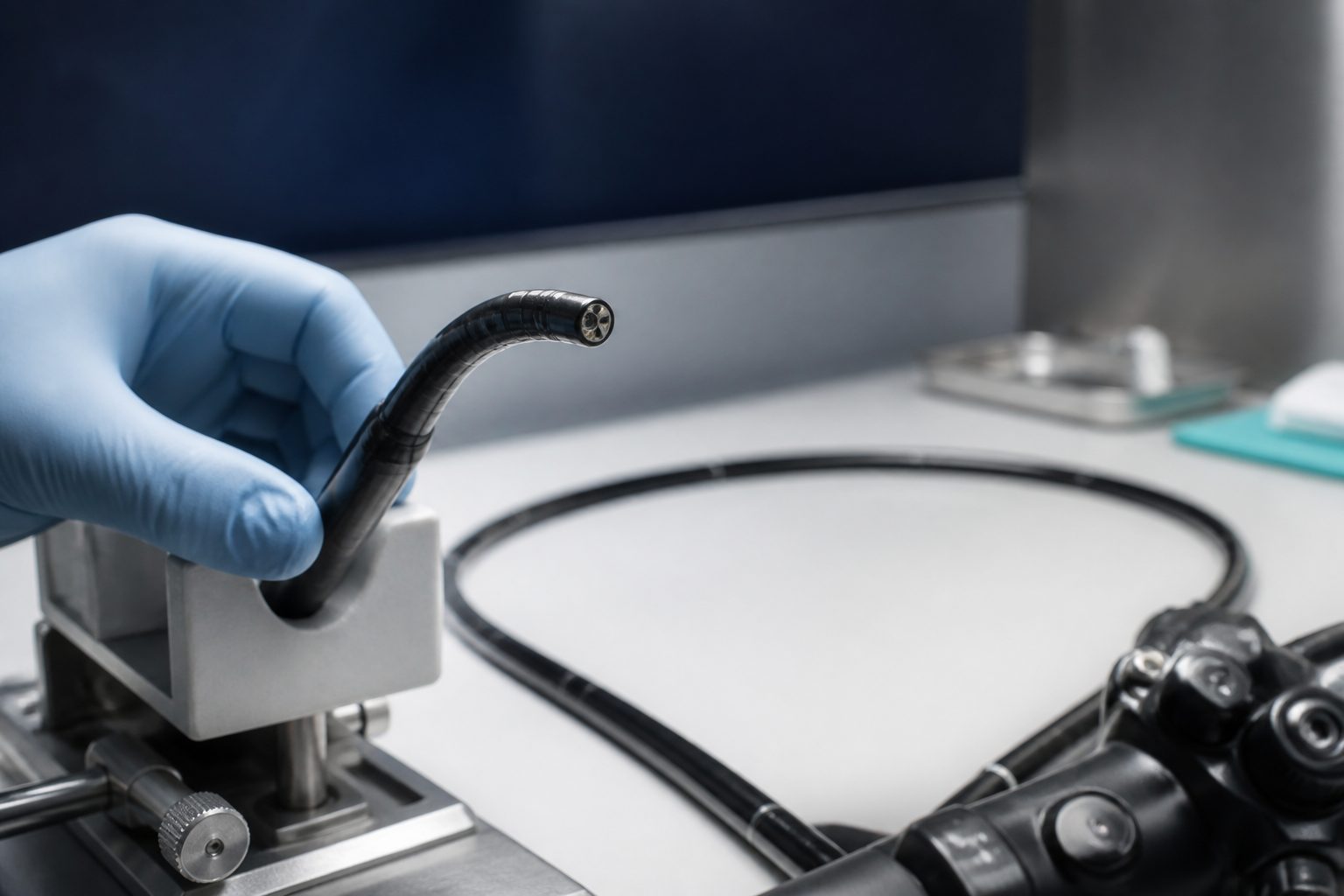
Gastroenterology
Colonoscope Repair for the Busiest Scope in Your GI Department
The colonoscope absorbs more force than anything else in endoscopy. We repair angulation, insertion tubes, channels, and optics on GI scopes from every major manufacturer, with a written quote before any work starts.
- Angulation and deflection recovery
- Insertion tube and bending rubber work
- Biopsy channel and port rebuilds
- Full leak test before and after
Get a Free Repair Quote
Tell us what failed and we will send a written quote before any work begins. No charge for the evaluation, and no purchase order needed to get one.
Quote before any work
You approve a written quote before a technician touches the scope.
Free evaluation
We diagnose the failure and price the repair at no charge, even if you decline.
We come and get it
Pickup and delivery across Southern California, mail-in service everywhere else.
Independent, not the OEM
All major manufacturers serviced, without OEM exchange pricing.
By symptom
Colonoscope Failures That Pull a Scope Out of Rotation
Six faults account for most of what arrives here from a GI unit. Find the one you are looking at right now.
Stretched angulation cables
Repeated looping in the sigmoid loads the up and down wires until deflection falls short of the model range. We replace the cables, reset tension at the control body, and verify the full sweep in all four directions.
Split or pinholed bending rubber
The bending section flexes on every case and eventually cracks at a fold. Left in service the scope takes on fluid at the next reprocessing cycle, so the rubber is replaced and the section is pressure checked.
Scored biopsy channel liner
Sharp accessories and hundreds of passes cut grooves into the working channel liner. Those grooves hold soil, fail cleaning verification, and eventually open through the wall. We replace the liner rather than patch it.
Crushed or buckled insertion tube
Cart doors, drawer edges, and torque against a fixed loop leave a permanent bend. We open the tube, check the internal wires and channels for collateral damage, and replace the outer tube.
Damaged distal lens or objective
A forceps strike, brush wear, or contact during withdrawal clouds the objective window. Lens replacement restores the field, and the imager seal is inspected while the tip is open.
Restricted air, water, or suction line
Dried debris and worn valve seats cut flow long before a channel closes completely. We clear the lines, replace the seats, and confirm flow at the distal tip under test.
What Looping Does to a Colonoscope Insertion Tube
Nothing else in the endoscopy suite carries the load a colonoscope does. Well over a meter of insertion tube gets torqued, looped, and pushed against a fixed bend, and every one of those maneuvers puts force into the angulation wires and the tube wall. The damage adds up quietly, which is why a scope can pass every check for months and then present three separate faults in the same week.
By the time the tip stops reaching full deflection, the cables have been stretching for a while. Tightening a control body is not a repair, it is a delay. We replace the wires, reset the tension, and check the sweep against the range the model was built to. The same logic applies to a tube that will not come back straight, where the visible bend matters far less than what happened to the wires and channels running through it.
Every device that arrives goes through the same intake as the rest of our flexible endoscope repair work. Leak test first, then channel patency, articulation range, and image quality, before anyone quotes a number.
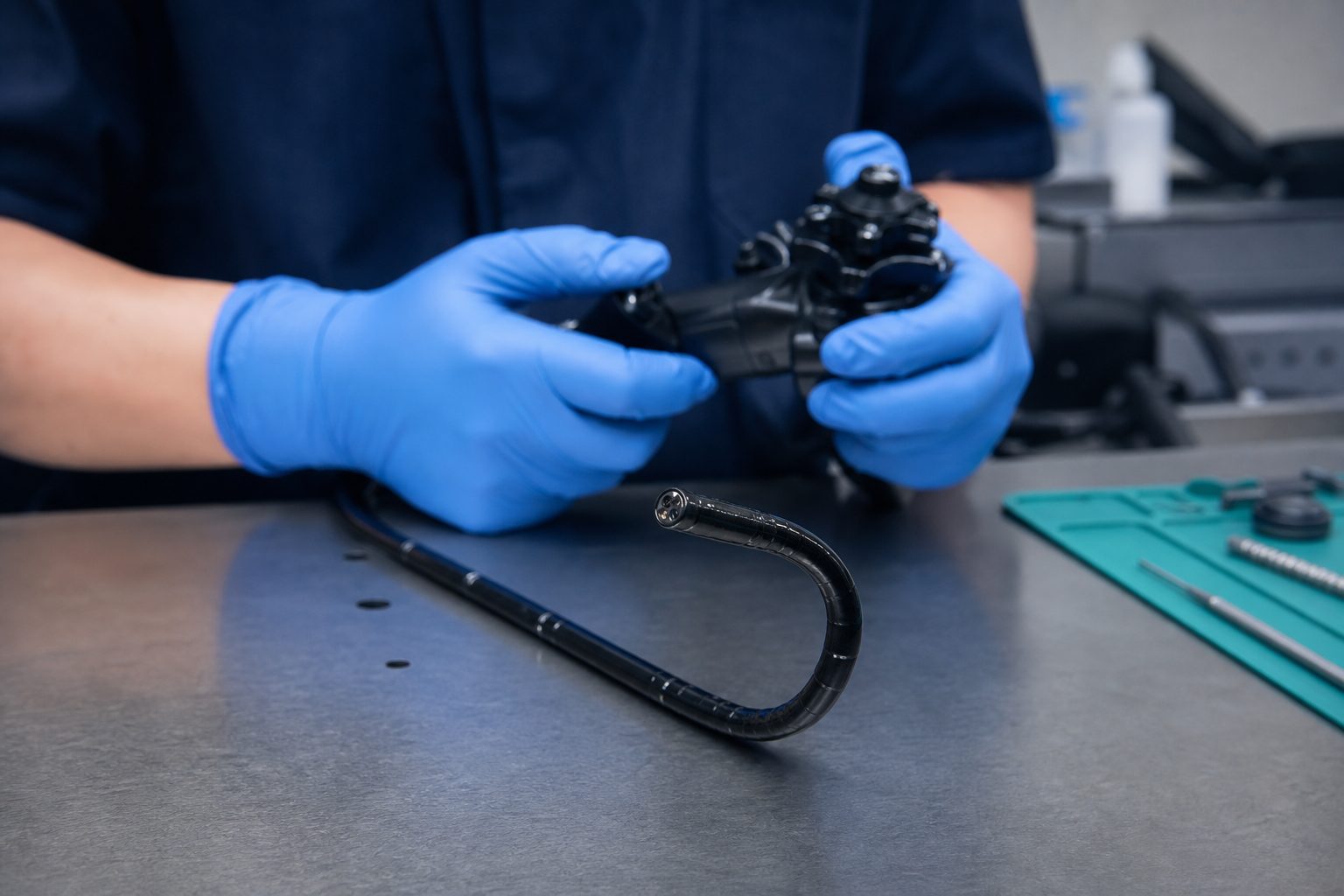
Colonoscope Channel Wear From Forceps, Brushes, and Snares
A high volume GI room runs biopsy forceps, snares, and cleaning brushes through the same working channel several times a day. The liner does not fail all at once. It scores, then it grooves, then it thins at the bends, and somewhere in that sequence the scope starts failing cleaning verification for reasons nobody can see from the outside.
That is the point where a channel replacement is still a channel replacement. Wait longer and the same scope arrives with fluid in the control section and a repair bill that no longer makes sense. If the port itself has started to leak or stick, the fix belongs on our working channel and biopsy port page, and if air or water pressure has dropped off, start with channel replacement and valve seat service instead.
Why GI Scope Repair Should Always Start With a Leak Test
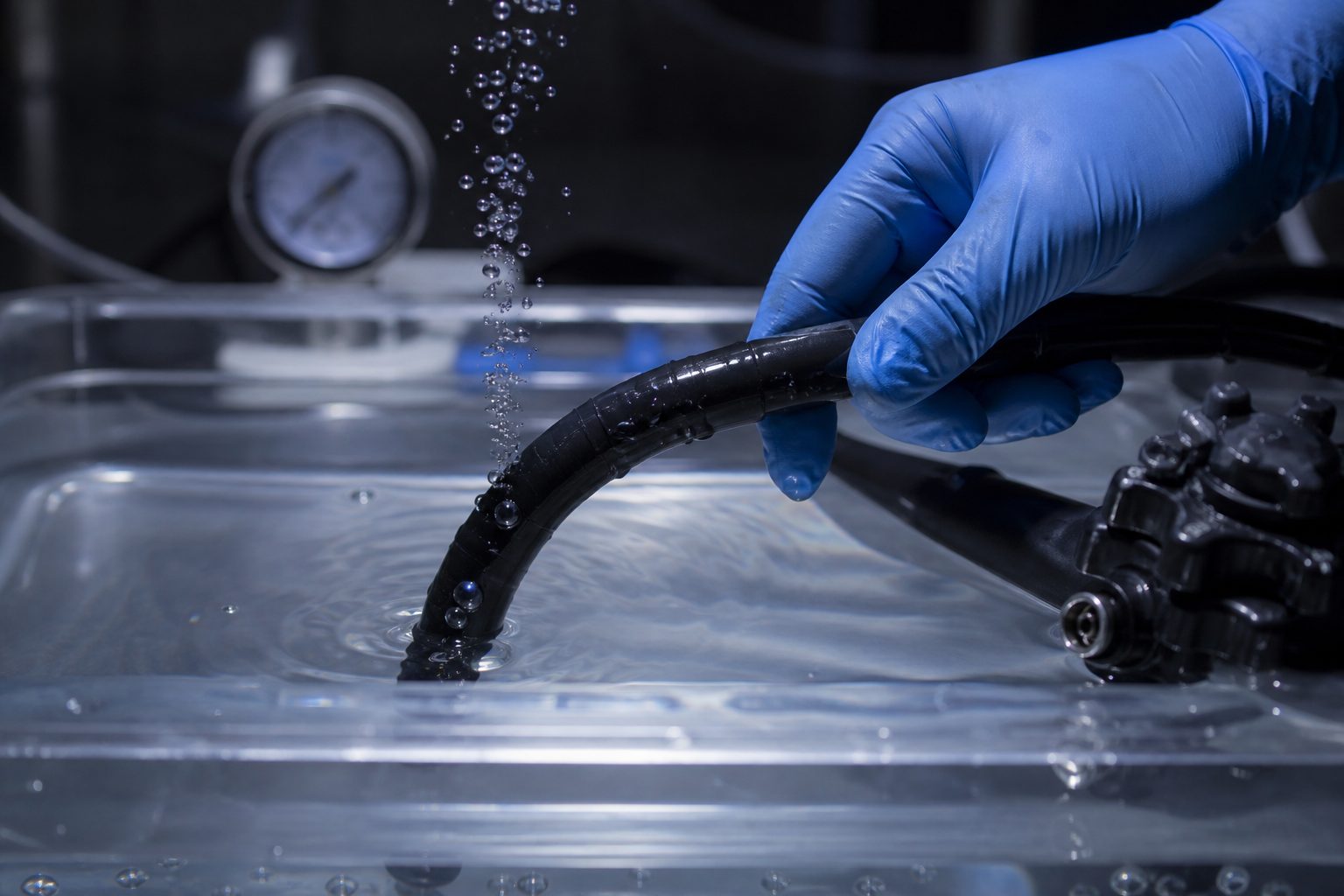
A colonoscope that fails a leak test is not a scrapped colonoscope. It is a scope that needs to come off the schedule today, before someone runs it through a reprocessor and turns a bending rubber replacement into a total loss. The breach is usually small and the window to act is short.
We leak test on arrival, again after the repair, and we document both. That order matters because a scope can pass a hand test in your decontamination room and still fail under sustained pressure on a bench. If your unit is looking at a failure right now, the fastest path is our leak testing and leak repair page, which explains what to do with the device in the meantime.
Most of what we receive from GI departments carries an Olympus nameplate, and the failure sequence on those platforms is well understood. Other manufacturers land on the same bench and go through the same intake.
Which Colonoscope Failures Are Worth Repairing
Not every device should come back. A scope with a compromised working channel, a history of fluid invasion, and stretched cables is often better retired than rebuilt, and saying so costs us a repair order rather than costing you twice. You get that assessment in writing before any work is authorized.
The quote is itemized so you can see the difference between the repair that returns the scope to rotation and the work that would extend its life another year. Plenty of departments approve the first and defer the second. That is a sound decision when both are on the page in front of you.
Departments that run colonoscopes usually run upper GI scopes on the same schedule, so a pickup often includes a gastroscope with bite damage or a duodenoscope with a worn elevator. One account, one point of contact, one set of paperwork.
How it works
How Colonoscope Service Runs From Pickup to Return
Four steps, and the decision about what gets fixed stays with your department.
Tell us what failed
Send the manufacturer, model, and what you are seeing. A photo of the damage helps but is not required.
We collect the scope
Courier pickup across Southern California, or ship the device in to our bench from anywhere in the country.
You get a written quote
We evaluate the device, document the failure, and price the repair. Nothing proceeds until you approve it.
Repaired, tested, returned
The device is repaired, leak and function tested, and returned with documentation for your records.
Questions we get
Colonoscope Repair Questions From Endoscopy and SPD Teams
Can you repair a colonoscope that already failed a leak test?
The tip only deflects part way. Is that a cable or a control body problem?
Do you replace the whole insertion tube or just the damaged section?
Will someone collect the scope, or do we ship it?
Can you service colonoscopes from more than one manufacturer?
Other Flexible Scope Repair Work We Handle
Same bench, same intake, different device. These are the scopes that usually travel in with your colonoscopes.
Free Evaluation Before Any Colonoscope Service Begins
Tell us the manufacturer, the model, and what the scope is doing. We will tell you what it costs to fix before anyone opens it.
Monday to Friday, 8:00 AM to 5:00 PM Pacific
Saturday and Sunday, closed
Mail-in repairs received any day
Serving Southern California with pickup and delivery, and the rest of the country by mail-in.