
Find your failure
Endoscope Repair by Symptom, Starting With What You Are Seeing
Match what the device is doing right now to the likely cause and the repair it needs. Each page explains what went wrong, what we do about it, and what not to do before the scope reaches us.
- Eight of the failures we see most often
- What causes it and what the repair involves
- What not to do before you send the device
- Free evaluation and a written quote first
Get a Free Repair Quote
Tell us what failed and we will send a written quote before any work begins. No charge for the evaluation, and no purchase order needed to get one.
Quote before any work
You approve a written quote before a technician touches the scope.
Free evaluation
We diagnose the failure and price the repair at no charge, even if you decline.
We come and get it
Pickup and delivery across Southern California, mail-in service everywhere else.
Independent, not the OEM
All major manufacturers serviced, without OEM exchange pricing.
By symptom
Common Endoscope Failures and What Each Repair Involves
Start from the symptom rather than the service line. If two of these describe the same device, send it and we will separate them on the bench.
How to Read a Scope Failure Before You Send It
Two pieces of information change what happens next: when the symptom appeared, and what the device was doing at the time. A scope that failed pressure testing at the start of a reprocessing cycle tells a different story from one that failed after it went through the reprocessor.
Write down the last case it was used on, whether it was dropped, whether an accessory was forced through the channel, and whether anyone noticed resistance during the last insertion. None of that is required to get a quote, but it shortens the evaluation and it sometimes changes the repair.
Photographs of the distal end, the bending section, and the connector are worth more than a long description. The repair request form accepts them along with the model number.
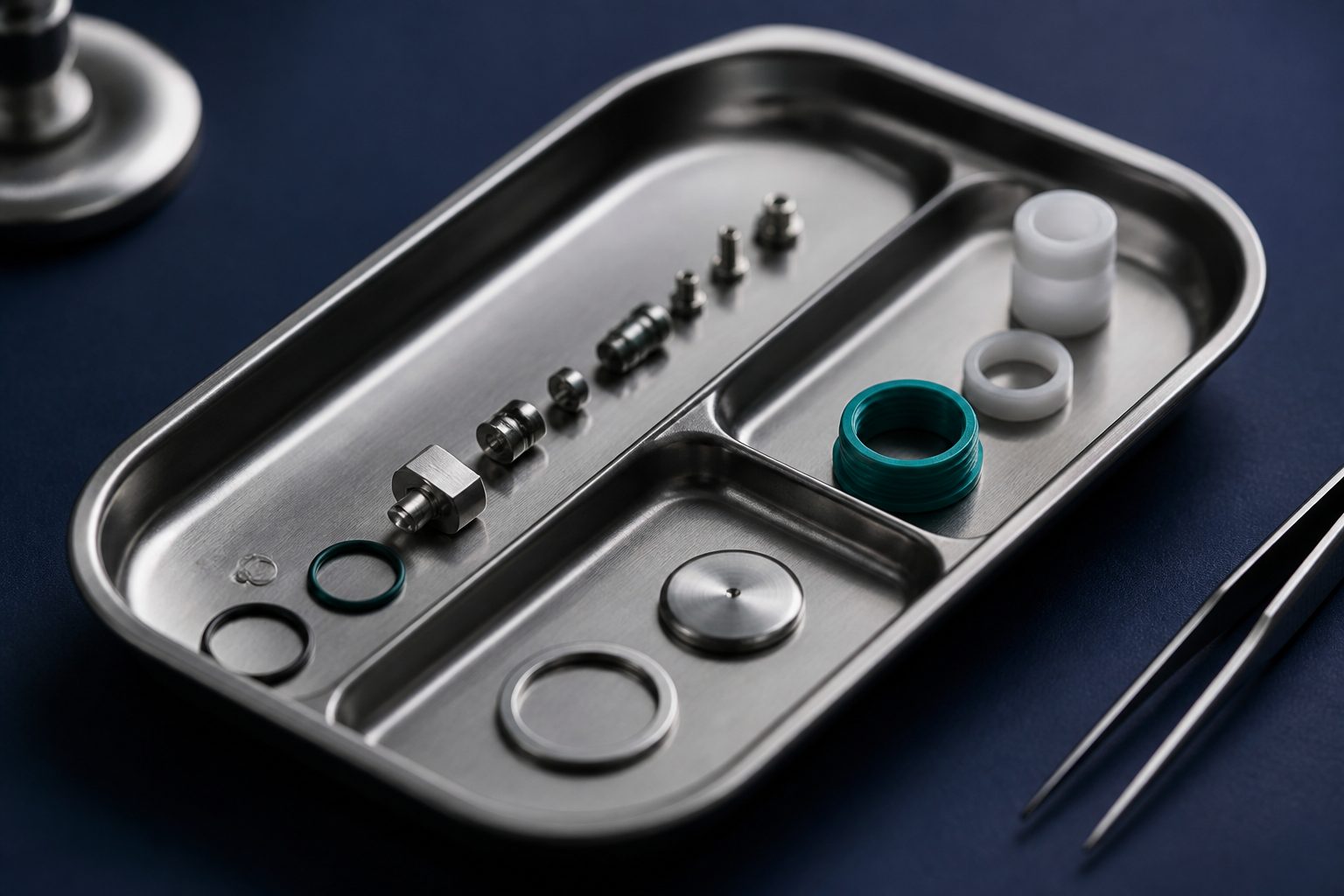
Why a Missed Leak Test Turns Into a Larger Scope Repair
The single most damaging event in a scope's life is not the breach. It is the reprocessing cycle that runs after the breach. A small perforation in the bending rubber is a contained repair. The same perforation after a full immersion cycle is fluid inside the control body, corroded angulation wires, and a repair that may cost more than the device is worth.
So the sequence matters. Take the device out of rotation the moment it fails pressure testing, keep it dry, and do not run it again to confirm. Confirmation is our job, and repeating the test is what turns a repair into a loss.
The two pages worth reading before you do anything else are leak testing and leak repair and what fluid invasion actually costs.
Matching the Symptom to the Right Flexible Scope Service
Some symptoms point straight at a component. A tip that will not reach full deflection is almost always steering hardware. Air or water that will not pass is a channel or a valve seat. A starred or blacked-out image is usually the distal lens, though a broken image bundle looks similar to anyone who is not holding the scope.
Others are less obvious. Dim illumination is diagnosed as a scope fault far more often than it deserves, because a light cable that has lost a third of its fibers produces exactly the same complaint. We test the cable and the scope together rather than assuming.
Once you know which service line a device belongs to, the detail sits with flexible endoscope service or with camera and video repair, depending on where the fault turns out to live.
Questions we get
Questions About Scope Repair and Failure Symptoms
The scope failed a leak test. Should we reprocess it anyway before shipping?
We have two symptoms on the same device. Which page do we start from?
Can you tell us the cause before we send the scope?
The image looks fine but the picture is dark. Is that the scope or the cable?
Is there a point where a scope is not worth repairing?
Start Your Endoscope Repair With a Free Evaluation
Describe the symptom in your own words. We will tell you the likely cause and what it costs to fix before anyone opens the device.
Monday to Friday, 8:00 AM to 5:00 PM Pacific
Saturday and Sunday, closed
Mail-in repairs received any day
Serving Southern California with pickup and delivery, and the rest of the country by mail-in.