
Power Equipment
Surgical Power Equipment Repair for Drills, Saws, and Drivers
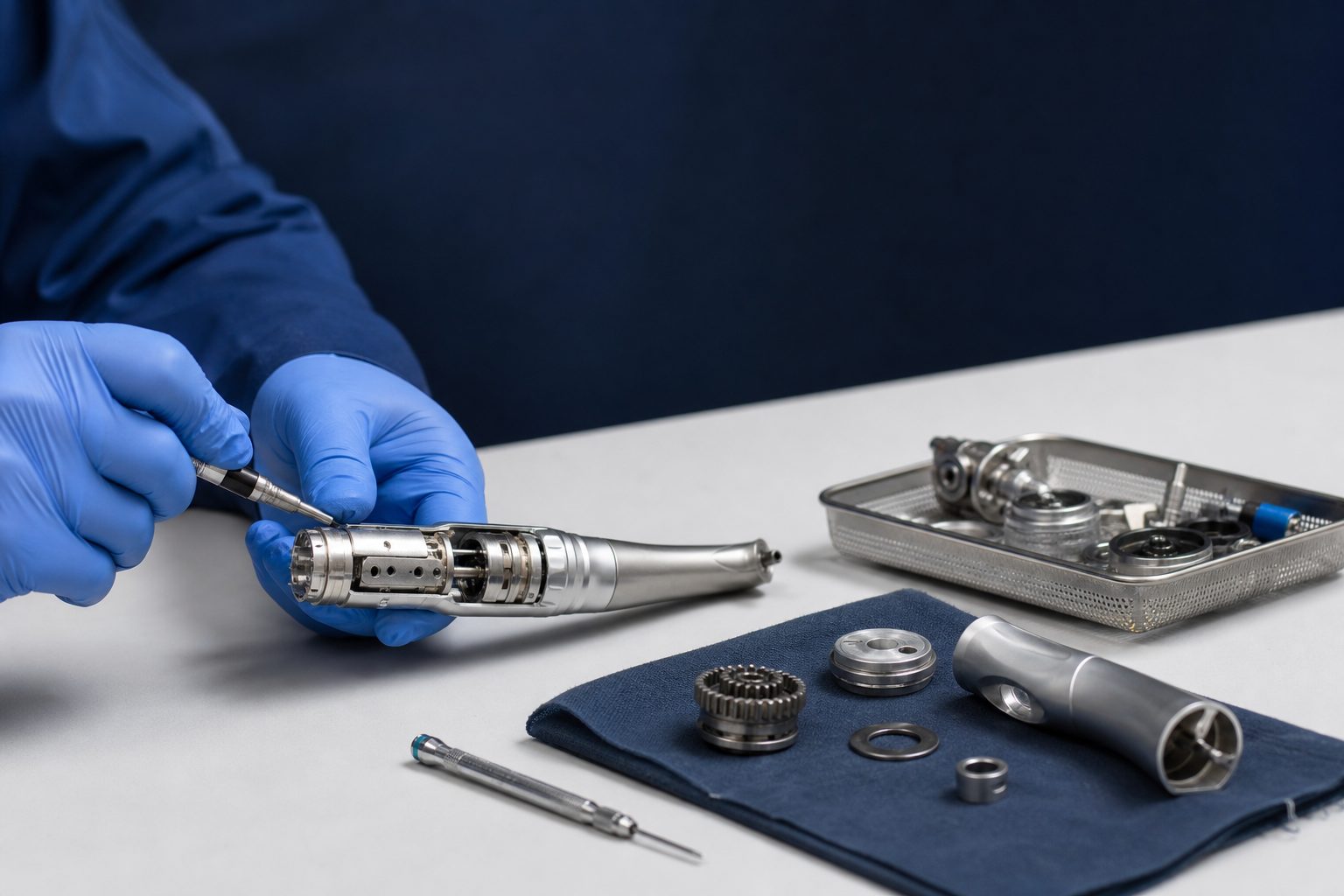
Pneumatic, electric, and battery handpieces rebuilt to torque and runout specification, with attachment, chuck, and coupling work handled at the same time. Written quote before any work begins.
- Pneumatic, electric, and battery handpieces
- Bearings, chucks, and couplings rebuilt
- Torque and runout checked before return
- Pickup in SoCal, mail-in elsewhere
Get a Free Repair Quote
Tell us what failed and we will send a written quote before any work begins. No charge for the evaluation, and no purchase order needed to get one.
Quote before any work
You approve a written quote before a technician touches the scope.
Free evaluation
We diagnose the failure and price the repair at no charge, even if you decline.
We come and get it
Pickup and delivery across Southern California, mail-in service everywhere else.
Independent, not the OEM
All major manufacturers serviced, without OEM exchange pricing.
What we fix
Power Equipment Repair Work We Perform in the Shop
The six faults that take a handpiece out of the set, and what the rebuild involves once it is apart.
Bearing replacement and runout correction
Vibration, heat, and noise almost always start at the bearings. They are replaced as a set and the spindle is checked for runout, because a handpiece that wobbles will chew through the next set of bearings faster than the last.
Chuck, collet, and coupling rebuilds
Slipping chucks, worn collets, and couplings that no longer lock an attachment are rebuilt to hold at full torque. A bur or blade that moves under load damages both the attachment and the drive train behind it.
Motor and gearbox service
Worn brushes, damaged windings, stripped gear teeth, and contaminated gearboxes are repaired and refilled. Loss of torque under load with no change at idle usually points here rather than at the battery.
Battery handpiece and charger repair
Contacts, seals, latches, and charging faults are addressed on battery platforms, along with the sterilization cases and shields that take the abuse. A handpiece that will not seat cleanly on a charger is a contact problem far more often than a cell problem.
Pneumatic hose, fitting, and seal repair
Leaking hoses, cracked fittings, and failed internal seals are replaced so the handpiece reaches rated speed at normal line pressure. Running an air tool on a leaking hose loses torque and pushes moisture into the motor.
Saw and shaver head service
Oscillating and sagittal saw heads, reamers, and arthroscopic shaver handpieces are rebuilt for blade retention, oscillation range, and suction path. Blade chatter that gets blamed on the blade is usually the head.
Handpiece Repair, Bearings, and the Runout You Can Feel
Powered equipment tells you it is failing long before it quits. It runs hotter than it used to, it sounds different at speed, and the surgeon mentions that it feels rough. Those are bearings, and they are the cheapest thing on the list to address while they are still only bearings.
Left alone, the same fault takes the spindle, then the gearbox, and a repair becomes a replacement. We change bearings as a set and check runout on the spindle, because a handpiece that is out of true destroys the new bearings on the same schedule as the old ones.
Every device is run under load after the rebuild rather than spun up on the bench. Torque loss appears under load and vanishes at idle, which is exactly why a quick bench test passes a handpiece the OR will reject the next morning.
Battery Handpiece Faults, Chargers, and Sterilization Cases
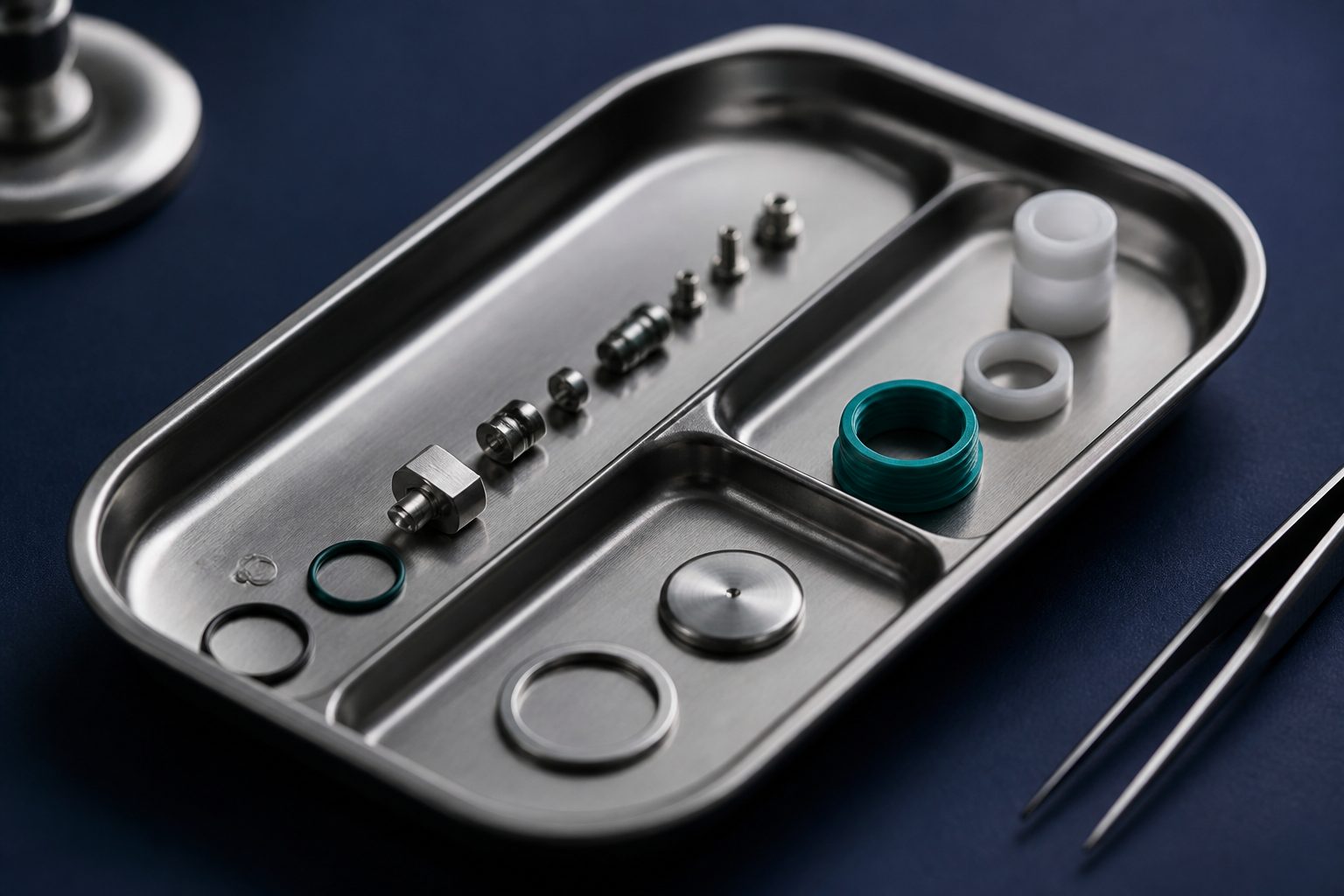
Battery platforms get blamed on the cells almost every time, and the cells are frequently fine. Contacts corrode, latches wear, seals stop sealing, and the handpiece stops seating cleanly on the charger. The symptom is a device that reads as flat in the middle of a case.
We work the contact path first, then the seals and latches, then the case and shield hardware that takes the real abuse in reprocessing. A cracked sterilization case is not cosmetic. It is how moisture reaches the contacts in the first place.
If several handpieces on the same platform are failing the same way, that pattern is worth documenting. It usually points at a reprocessing step rather than the equipment, and it is cheaper to correct the step than to keep rebuilding the tools.
Drill and Saw Attachments, Chucks, and Couplings
Attachments are the part of the set that nobody sends in. They stay in the case, they wear quietly, and then a bur starts moving under load and the drill gets sent out for a fault the drill does not have. Chucks, collets, and couplings all lose their grip with use.
Send the attachments with the handpiece. Testing them as a set is the only way to know whether the slip is in the tool or in the thing bolted to the front of it, and it prevents a device coming back that still fails on the first case.
The same applies to saw heads and arthroscopic shavers. Blade chatter and poor oscillation get blamed on the blade until the head is checked, and shaver handpieces from arthroscopy platforms such as Stryker power and arthroscopy sets are common enough here that the wear pattern is familiar.
Power Equipment That Fails Mid Case and Why
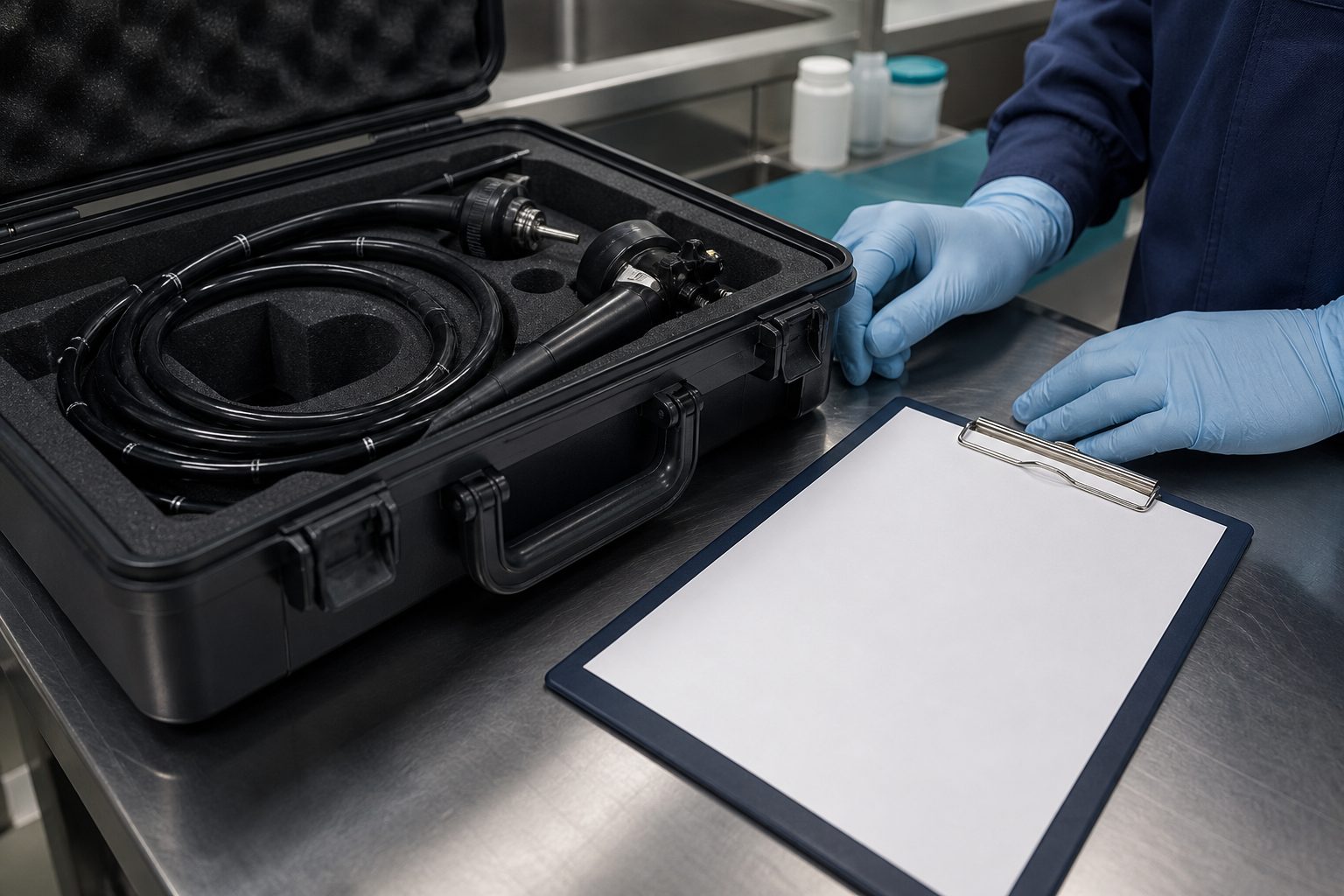
The failures that hurt are the ones that appear during a procedure, and almost all of them were visible beforehand. Heat, noise, vibration, a chuck that needs a second attempt to lock, a battery that seats loosely. Each of those is a scheduled repair if it is caught, and an incident if it is not.
A short quarterly review of the powered set catches most of it. If sending equipment out is the obstacle, a technician can look at the handpieces in your building during a scheduled visit, which is covered on the on-site service page.
Orthopedic rooms generally send power and arthroscopy equipment together, so the arthroscope service page and the dim illumination page are worth a look at the same time. The full list of equipment we repair runs under one account, alongside instrument tray work.
How it works
How Surgical Power Service Works From Pickup to Return
Four steps, and the rebuild is priced in writing before a housing comes apart.
Tell us what failed
Send the manufacturer, model, and what you are seeing. A photo of the damage helps but is not required.
We collect the scope
Courier pickup across Southern California, or ship the device in to our bench from anywhere in the country.
You get a written quote
We evaluate the device, document the failure, and price the repair. Nothing proceeds until you approve it.
Repaired, tested, returned
The device is repaired, leak and function tested, and returned with documentation for your records.
Manufacturers Whose Surgical Power Equipment We Repair
Powered handpieces, shavers, and attachments across the platforms running in orthopedic and general ORs.
Questions we get
Power Equipment Questions From Biomed and SPD Teams
Our drill runs hot and sounds rough. Is that worth sending in?
Should we send the attachments with the handpiece?
The battery handpiece dies mid case. Is that always the cells?
Do you test under load or just spin it up on the bench?
Can a technician look at our powered sets in the building?
Other Equipment We Repair Beside Surgical Power Tools
The scopes, cameras, cables, and instrument sets that leave the room on the same case cart.
Get a Free Quote on Surgical Power Equipment Repair
Tell us the platform, the handpiece, and what the OR is reporting. We price the rebuild before anything comes apart.
Monday to Friday, 8:00 AM to 5:00 PM Pacific
Saturday and Sunday, closed
Mail-in repairs received any day
Serving Southern California with pickup and delivery, and the rest of the country by mail-in.