
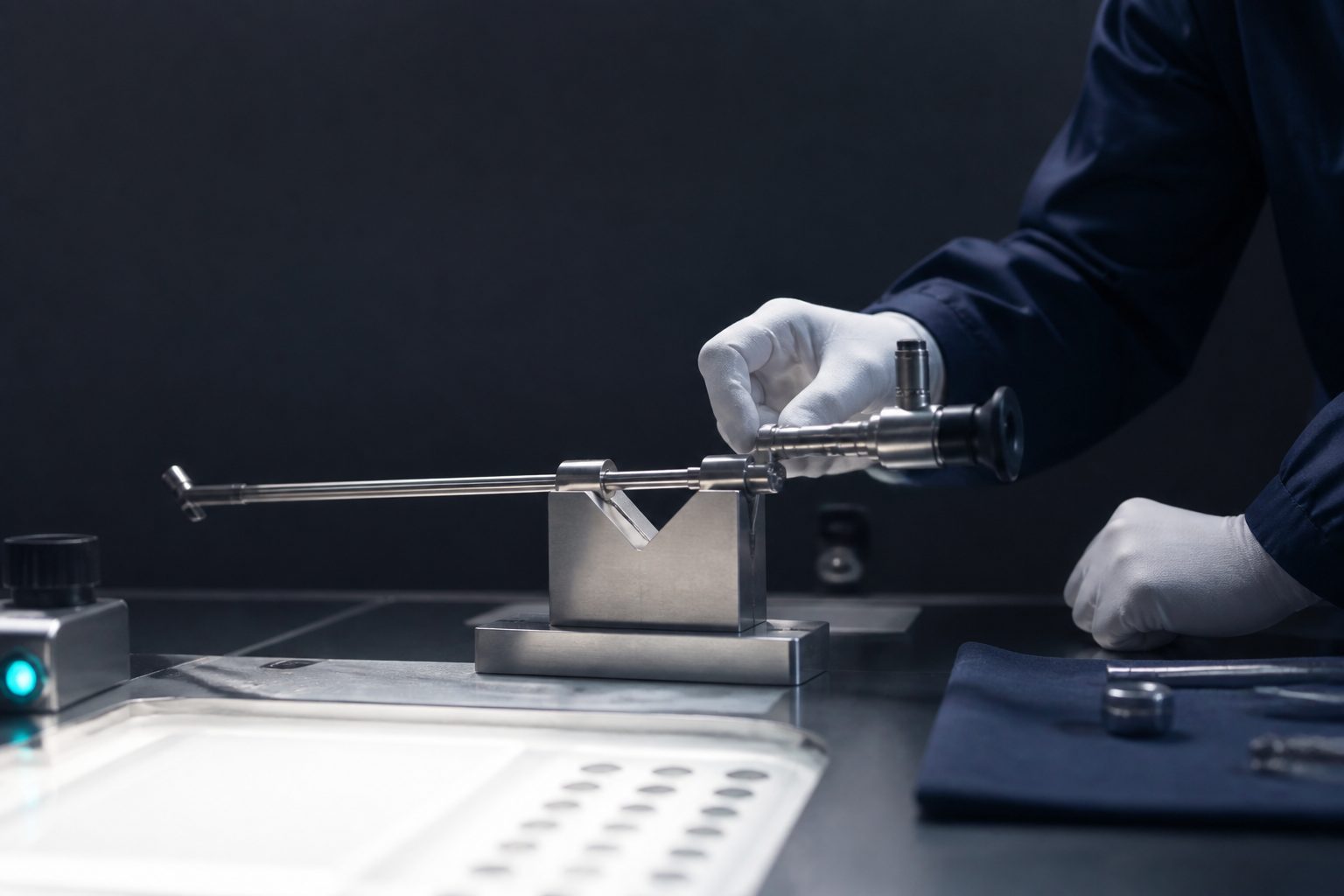
Rigid Endoscopes
Rigid Endoscope Repair for Operating Rooms and Surgery Centers
Rod lens replacement, optical relay rebuilds, shaft straightening, and autoclave seal restoration on rigid and semi-rigid surgical telescopes. You approve a written quote before any work begins.
- Rod lens and optical relay rebuilds
- Autoclave seal restoration and leak checks
- Shaft straightening on bent telescopes
- Pickup in SoCal, mail-in elsewhere
Get a Free Repair Quote
Tell us what failed and we will send a written quote before any work begins. No charge for the evaluation, and no purchase order needed to get one.
Quote before any work
You approve a written quote before a technician touches the scope.
Free evaluation
We diagnose the failure and price the repair at no charge, even if you decline.
We come and get it
Pickup and delivery across Southern California, mail-in service everywhere else.
Independent, not the OEM
All major manufacturers serviced, without OEM exchange pricing.
What we fix
Rigid Scope Repair Work We Perform on Optics and Shafts
The six failures that put most telescopes on the bench, and what the repair actually involves once the optic is out.
Rod lens replacement
Cracked, chipped, or shifted rod lenses are replaced individually rather than by swapping the whole optic. A single damaged element is what turns a clear field into a starred or half-black image.
Optical relay rebuild
The full relay is disassembled, cleaned, realigned, and reset so the image is sharp corner to corner. Rotational play in the eyepiece and a soft edge on one side both trace back to the relay stack.
Shaft straightening and sheath repair
Bent shafts from joint access, trocar side load, and drawer damage are straightened and checked for concentricity. Dented or ovalized outer sheaths are repaired so the telescope seats correctly in the bridge again.
Autoclave seal restoration
Steam gets in where the seals have given up, and the fogging shows up mid case rather than in decontamination. We replace the seals, purge and refill the optic, and pressure check it before it goes back.
Eyepiece and coupler interface repair
Worn eyepiece cups, loose focus rings, and damaged coupler surfaces are rebuilt so the camera head seats square. A coupler that does not sit flat reads on the monitor as a soft image nobody can dial out.
Light post and fiber bundle service
Broken illumination fibers, cross-threaded light posts, and burned post fittings are repaired to restore output. Dim illumination is diagnosed at the telescope, the post, and the cable rather than blamed on the source.
By telescope type
Scope Repair by Rigid Telescope Type
An arthroscope and a resectoscope fail for completely different reasons. Start with the one your OR is short on.
Rod Lens and Optical Relay Rebuilds on Surgical Telescopes
A rigid optic is a stack of precisely spaced glass elements inside a tube that gets handled like a hand tool. That is the whole problem in one sentence. It takes very little force to shift or crack an element, and the result is a field that has gone soft, starred, or dark on one side.
We work at the element level. A single damaged rod lens is replaced and the relay is realigned rather than the entire optic being written off, which is often the difference between a repair order and a replacement purchase. The telescope is inspected end to end afterward, because a shifted element and a bent shaft frequently arrive together.
The three telescopes we see most each have their own page. Start with arthroscopes bent during joint access if orthopedics is short, or with 5 mm and 10 mm laparoscopes for general surgery. Urology usually arrives here as rigid cystoscopes with bridge and sheath damage.
Autoclave Damage and the Rigid Scope Repairs It Causes
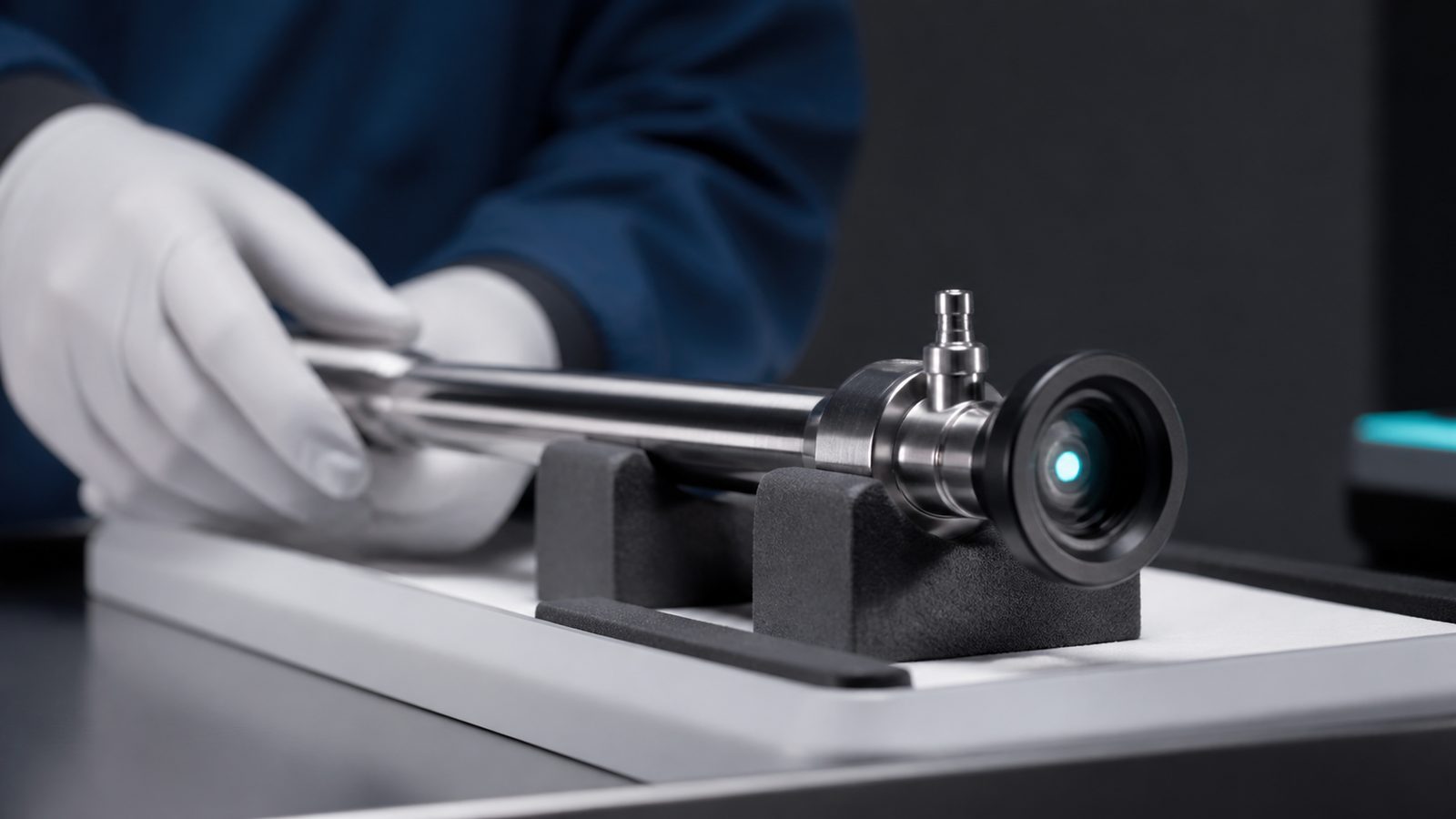
Steam sterilization is what makes a rigid telescope practical and what slowly destroys it. Every cycle works on the seals, and once a seal gives up, moisture enters the optical space. The failure rarely announces itself in decontamination. It announces itself when the image fogs twenty minutes into a case.
If a telescope fogs and then clears as it warms, that is a seal, not a cleaning problem, and it will not get better on its own. Wiping the eyepiece is treating the symptom. We replace the seals, dry and refill the optic, and pressure test it so the same fault does not come back on the next tray.
Autoclave damage also shows up as a dim field, which is why we check the illumination path at the same time. If your OR is already chasing brightness, the broken light fiber page explains how to tell a telescope problem from a cable problem before you buy another light source.
Shaft Straightening and Sheath Work in Rigid Endoscopy Sets
Bent shafts come from real surgery, not carelessness. Side load against a trocar, a tight joint capsule, and a tray that got closed on an angled telescope all produce the same result. The shaft is out of true, the image rotates oddly, and the optic no longer seats in the sheath the way it should.
We straighten and check concentricity rather than simply making it look right. A telescope that is visually straight but still out of true will bind in the bridge and damage itself again. Dented and ovalized sheaths are repaired at the same time, since one almost always caused the other.
Urology and gynecology sets take the worst of this, and the working elements they connect to have their own failure modes. There are separate pages for resectoscope working elements and insulation and diagnostic and operative hysteroscopes.
What Independent Endoscope Repair Changes for the OR
OEM exchange programs price a telescope before anyone looks at it, and they hand back a different asset than the one you sent. That is defensible when the volume is high and the paperwork is simple. It also means the department never learns which telescopes fail, how, or why, and the serial numbers on the sheet stop matching the ones in the tray.
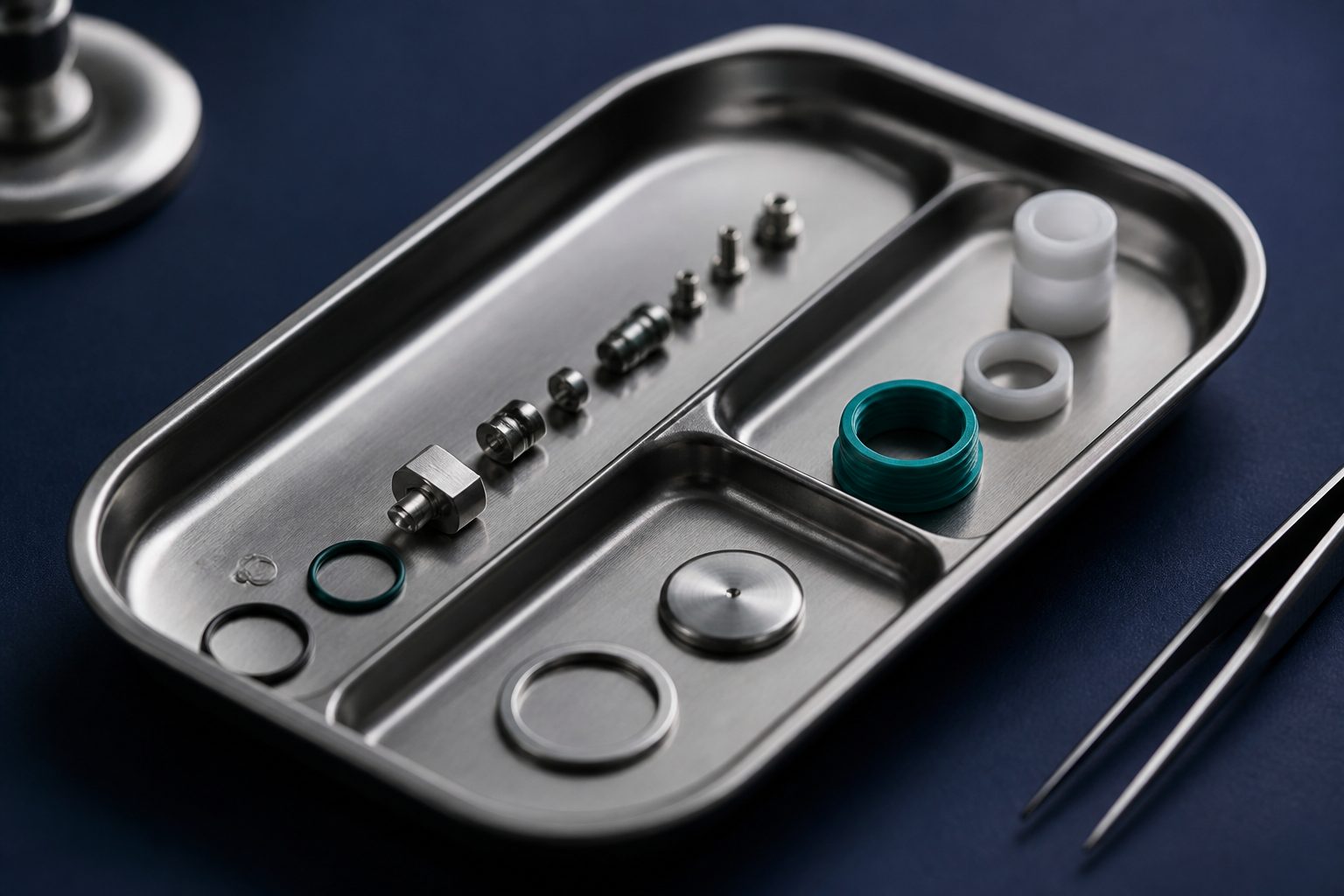
We open the device, document what failed, and put a price in writing. You approve it or you do not, and either way the telescope comes back to you. Departments that have been surprised by a revised invoice tend to notice the difference immediately.
Most OR sets are standardized on one or two platforms, and we service all of them. If yours are Karl Storz rigid telescopes, the pattern is familiar. The rest of the shop is listed on the services overview, including the camera heads and couplers that get blamed for optical faults they did not cause.
How it works
How Rigid Endoscope Service Moves From Pickup to Return
Four steps, and no work happens until the quote in front of you has been approved.
Tell us what failed
Send the manufacturer, model, and what you are seeing. A photo of the damage helps but is not required.
We collect the scope
Courier pickup across Southern California, or ship the device in to our bench from anywhere in the country.
You get a written quote
We evaluate the device, document the failure, and price the repair. Nothing proceeds until you approve it.
Repaired, tested, returned
The device is repaired, leak and function tested, and returned with documentation for your records.
Rigid Endoscope Brands We Service
Telescopes from every major OR platform, including legacy sets the original manufacturer stopped supporting years ago.
Questions we get
Rigid Scope Repair Questions From OR and SPD Teams
Our telescope fogs partway through a case. Is that repairable?
Can a bent arthroscope be straightened, or is it scrap?
Do you replace individual rod lenses or the whole optic?
Can you service legacy telescopes the manufacturer no longer supports?
How do we tell a telescope problem from a camera problem?
Other Equipment We Repair Beside Rigid Telescopes
The cameras, couplers, cables, and instruments that share a tray with your telescopes and fail on the same schedule.
Get a Free Quote on Rigid Endoscope Repair
Tell us the manufacturer, the diameter, the angle, and what the surgeon reported. We price the repair before anyone opens the optic.
Monday to Friday, 8:00 AM to 5:00 PM Pacific
Saturday and Sunday, closed
Mail-in repairs received any day
Serving Southern California with pickup and delivery, and the rest of the country by mail-in.