
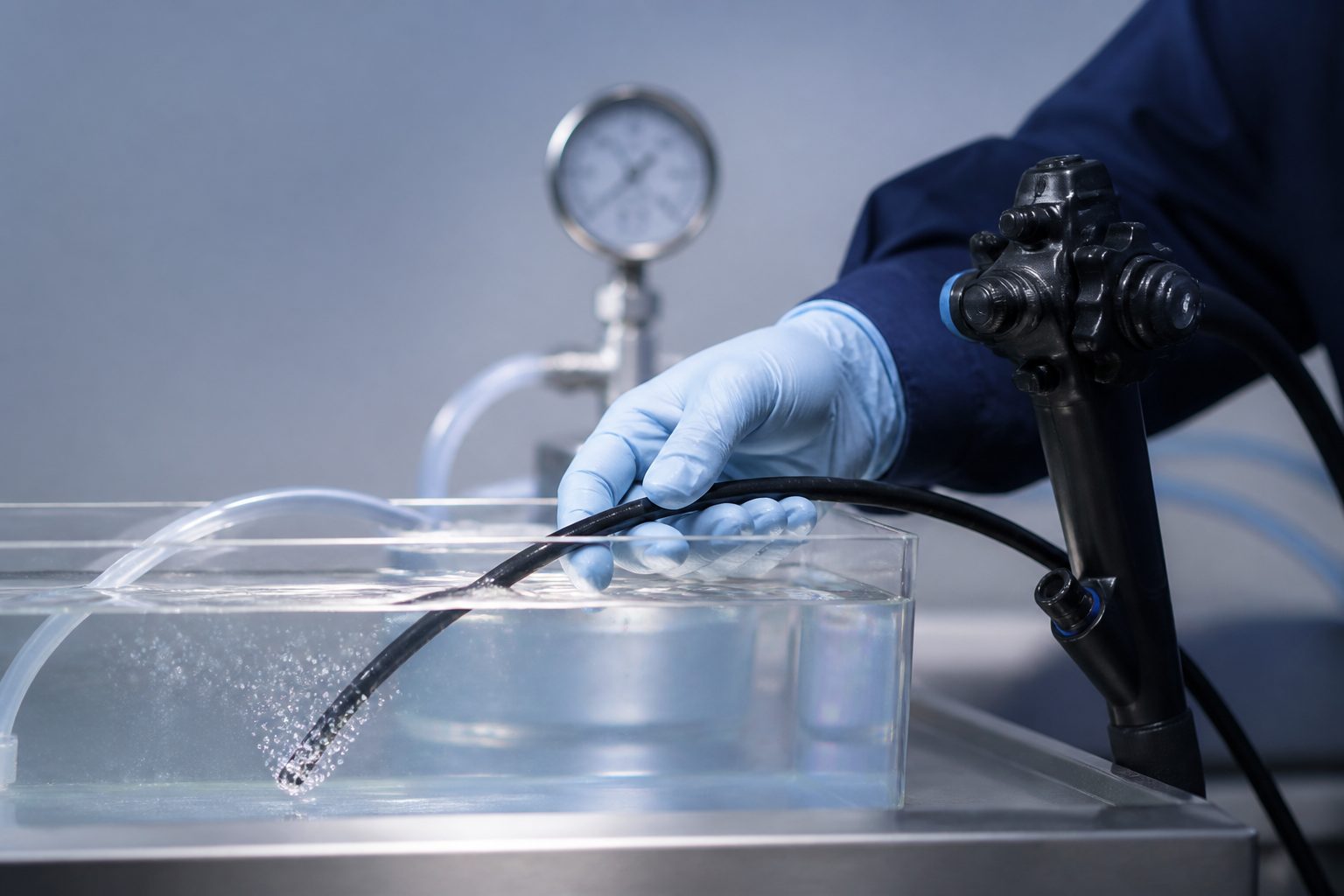
The insertion tube is kinked, buckled, or will not straighten
Bent Insertion Tube Repair for a Kinked, Buckled, or Crushed Scope
A visible kink or a section that will not lie straight means the tube wall has been deformed and whatever runs through it has been deformed too. What is inside decides the repair, not what you can see outside.
- Section and full tube replacement on flexible scopes
- Internal channel, wire, and bundle assessment
- Free evaluation and a written quote first
- Pickup in Southern California, mail-in nationwide
Get a Free Repair Quote
Tell us what failed and we will send a written quote before any work begins. No charge for the evaluation, and no purchase order needed to get one.
Quote before any work
You approve a written quote before a technician touches the scope.
Free evaluation
We diagnose the failure and price the repair at no charge, even if you decline.
We come and get it
Pickup and delivery across Southern California, mail-in service everywhere else.
Independent, not the OEM
All major manufacturers serviced, without OEM exchange pricing.
Symptom to cause
What the Shape of the Insertion Tube Is Telling You
A kink, a soft spot, and a permanent curve are three different faults with three different repairs. Match what you are holding.
What you see
A sharp kink with a visible crease or fold in the outer sheath
Likely cause
The tube was bent past its minimum radius, usually crushed in a door, a drawer, a cart wheel, or a transport case lid.
What we do
Replace the affected tube section. The braid and the coil layer under the sheath are permanently deformed at a crease and cannot be recovered.
What you see
A soft or floppy section that no longer supports its own weight
Likely cause
The internal spiral bands and braid have separated or collapsed while the outer sheath stayed intact, so the damage is hidden.
What we do
Replace the section, and inspect the channels running through it for the flattening that usually accompanies a collapsed wall.
What you see
A permanent bow or set curve when the scope is laid on a flat surface
Likely cause
Long term storage coiled too tightly, or a slow crush that stretched the tube on one side without folding it.
What we do
Assess for internal damage first. Some set curves are cosmetic, and some sit on top of a stretched angulation wire that will fail next month.
What you see
The kink is accompanied by loss of tip deflection in one or both planes
Likely cause
Angulation wires inside the deformed section are binding in their sheaths, or one has stretched or parted at the crush point.
What we do
Replace the tube section and the affected wires and sheaths together, then reset tension so both planes reach their full range evenly.
What you see
The scope kinked and now fails a leak test
Likely cause
The crease has split the outer sheath, or the crush has opened a bonded joint. The sealed envelope is breached at the damage point.
What we do
Treat this as an urgent job. The tube is replaced and the scope pressure tested, and the interior is assessed for fluid that got in after the crush.
What you see
Suction, air, or water flow dropped off after the tube was crushed
Likely cause
A channel liner has been flattened or split inside the deformed section, restricting flow without any external sign.
What we do
Replace the tube and the affected channel run, then confirm patency and flow rate on every line before the scope is reassembled.
What Not to Do With a Kinked Scope
Almost every irrecoverable insertion tube we receive was made irrecoverable in the department, with good intentions.
- Do not try to straighten a kinked insertion tube by hand. The outer sheath will flatten out and look repaired, while the braid, the coil, the channel liners, and the angulation wires inside it are being worked back and forth at the exact point where they are already damaged. Straightening turns a section replacement into a rebuild.
- Do not roll, press, or clamp the tube against a flat surface to take a bend out. The same logic applies with more force. A tube that has been pressed straight also hides the crease from the technician who has to find the damage.
- Do not reprocess a scope that kinked until it has passed a leak test. A crease very often splits the sheath, and immersion after that turns a mechanical repair into fluid damage inside the scope. Test first, then decide.
- Do not keep using a scope with a soft or collapsed section because it still articulates. The collapsed area is where the next full break happens, and it will happen with a patient on the table rather than on a bench.
- Do not store or transport the damaged scope coiled. Lay it out straight or hang it, and pack it with the damaged section supported rather than curved. Shipping a kinked tube tightly coiled is how a repairable section becomes a total loss in transit.
Why Hand Straightening a Kinked Scope Makes the Repair Bigger
The insertion tube is not a hose. It is a layered structure: a helical metal band for crush resistance, a stainless braid over it for torque transmission, and a polymer sheath bonded over both. Bend it past its radius and the band buckles, the braid distorts, and the sheath creases. Those three layers do not recover their geometry, and they no longer sit against each other the way they were built to.
When someone straightens the tube by hand, the sheath yields first because it is the most compliant layer. The kink disappears visually. Underneath, the buckled band is being pushed back through its own deformation, the braid wires are being worked, and every channel liner and angulation wire crossing that point is being flexed at its weakest spot. The damage does not reverse. It spreads.
This is why we ask departments to send the scope as it is, kink and all. An untouched crease tells a technician exactly where the load went and how far it traveled. A tube that has been pressed straight hides that, and the evaluation ends up wider than it needed to be. The same principle runs through the rest of the failure modes we repair.
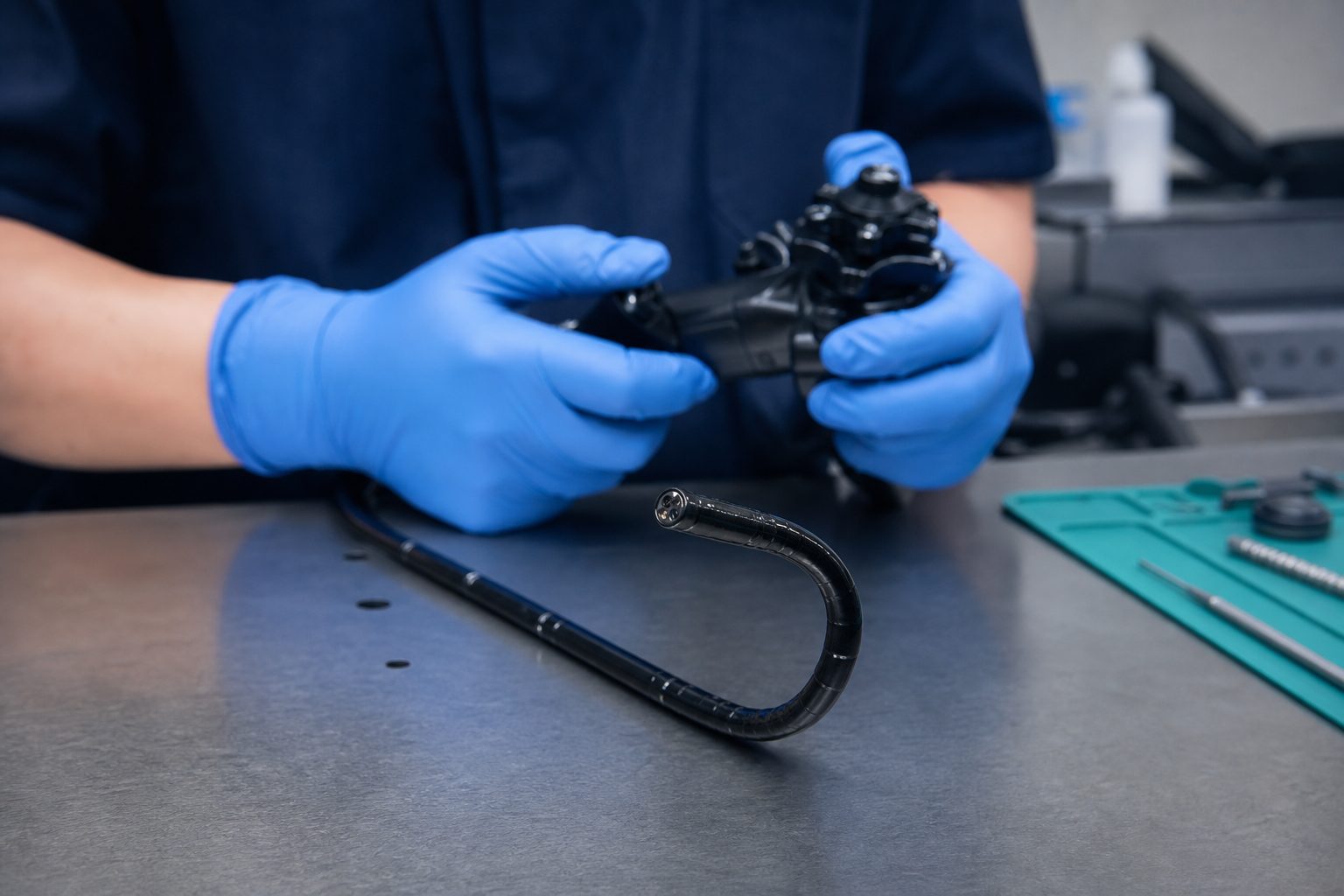
How Insertion Tube Damage Happens Between the Cases, Not During Them
Crush damage is a logistics failure far more often than a clinical one. When we ask departments where the scope was when it was found bent, the answers repeat.
- Caught in a cabinet door, a drawer, or a transport case lid closed on a loop of tube
- Run over by a cart wheel after a scope was laid on the floor or hung too low
- Coiled inside its own case at a radius tighter than the tube tolerates, over months
- Bent hard against the edge of a reprocessing sink or an automated reprocessor basin
- Pulled sharply while one end was still connected to the light source or the suction line
- Packed for shipping in a coil, with no support under the section that was already damaged
What Runs Through the Insertion Tube and What a Crush Does to It
The reason a small dent costs more than it looks like it should is that the tube is a conduit for everything that makes the scope work. Two angulation wires per plane run inside their own sheaths. The air, water, suction, and working channels run their full length. On a fiber scope, the image bundle and the illumination bundles run alongside them. On a video scope, the sensor cabling does.
A crush event compresses all of that against the tube wall at once. Angulation wires bind or stretch, which is why loss of deflection so often shows up in the same week and sends people to our steering and deflection page. Channel liners flatten, which cuts suction and flow. Illumination fibers break, and unlike everything else that damage is permanent and cumulative.
So the honest answer to what an insertion tube repair costs is that it depends on what the crush reached, and nobody can tell you that from a photograph. What the photograph does tell us is how bad the geometry is and roughly how much of the run is involved, which is enough to have a useful conversation before the scope ships.
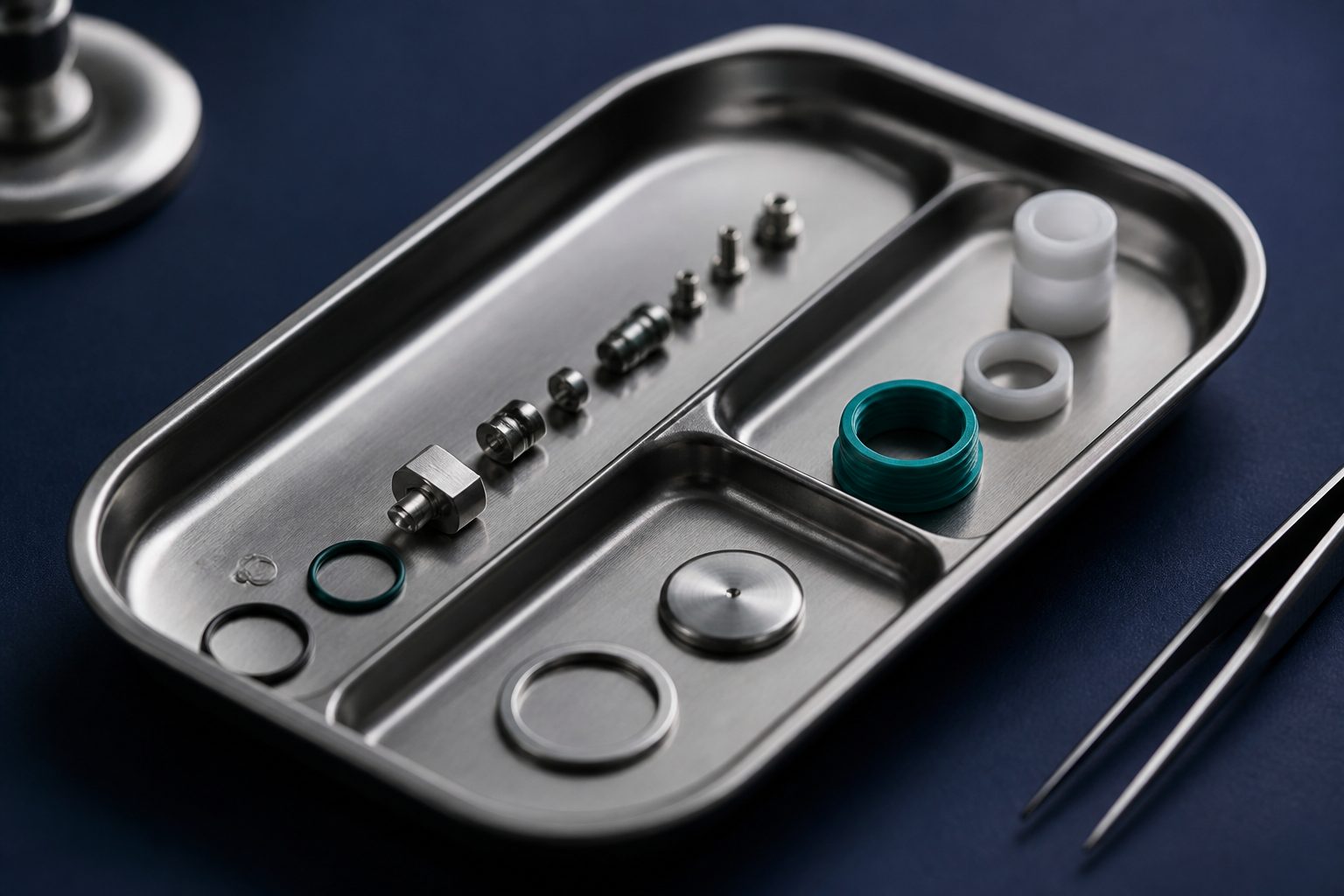
What We Check Before Quoting Tube Repair on a Bent Scope
Every scope with tube damage gets a leak test first, because a crease that has split the sheath changes the urgency of everything else. Then channel patency and flow on each line, articulation range in all four directions against the control body, image assessment, and illumination output. Only after that do we quote, and the quote separates what puts the device back in rotation from what would extend its service life.
The repair itself is section replacement or full insertion tube replacement, depending on where the damage sits and how much of the internal run is affected. Damage close to the distal end is often the more involved job, because the bending section and the tip assembly sit right behind it. This is routine flexible scope bench work, and the scope is leak tested again after reassembly.
We see this fault most on the longest and most handled devices in the building. Colonoscope service leads by a wide margin, and small diameter bronchoscope work follows, because a thin tube reaches its bend limit at a radius people do not expect.
How it works
How Insertion Tube Replacement Works on Our Bench
The outside is the easy part. We assess what the deformation did to the channels, the wires, and the bundles before quoting anything.
Tell us what failed
Send the manufacturer, model, and what you are seeing. A photo of the damage helps but is not required.
We collect the scope
Courier pickup across Southern California, or ship the device in to our bench from anywhere in the country.
You get a written quote
We evaluate the device, document the failure, and price the repair. Nothing proceeds until you approve it.
Repaired, tested, returned
The device is repaired, leak and function tested, and returned with documentation for your records.
Questions we get
Insertion Tube Questions From SPD and Endoscopy Teams
Can a kinked insertion tube be straightened rather than replaced?
The tube is bent but the scope still works. Do we have to pull it now?
Do you replace the whole insertion tube or just the damaged part?
How should we pack a scope with a bent tube for shipping?
The scope lost deflection at the same time it was crushed. Is that one repair?
Is a scope with a set curve from storage still usable?
Other Flexible Endoscope Faults That Follow Tube Damage
A crushed tube rarely presents alone. These are the faults that show up in the same evaluation.
Leak Testing
The scope fails a leak test in reprocessing
Fluid Invasion
Fluid has entered the scope body or control section
Cracked Distal Lens
The image is starred, hazy, or partially blacked out
Angulation Loss
The tip will not reach full deflection or feels loose
Dim Illumination
The field is dim even at full light source output
Channel Blockage
Air or water will not pass, or insufflation is weak
Biopsy Port
The biopsy port leaks, sticks, or will not seal
Get a Quote on Bent Insertion Tube Repair
Tell us the manufacturer, the model, and where along the tube the damage sits. Photograph it lying flat if you can.
Monday to Friday, 8:00 AM to 5:00 PM Pacific
Saturday and Sunday, closed
Mail-in repairs received any day
Serving Southern California with pickup and delivery, and the rest of the country by mail-in.